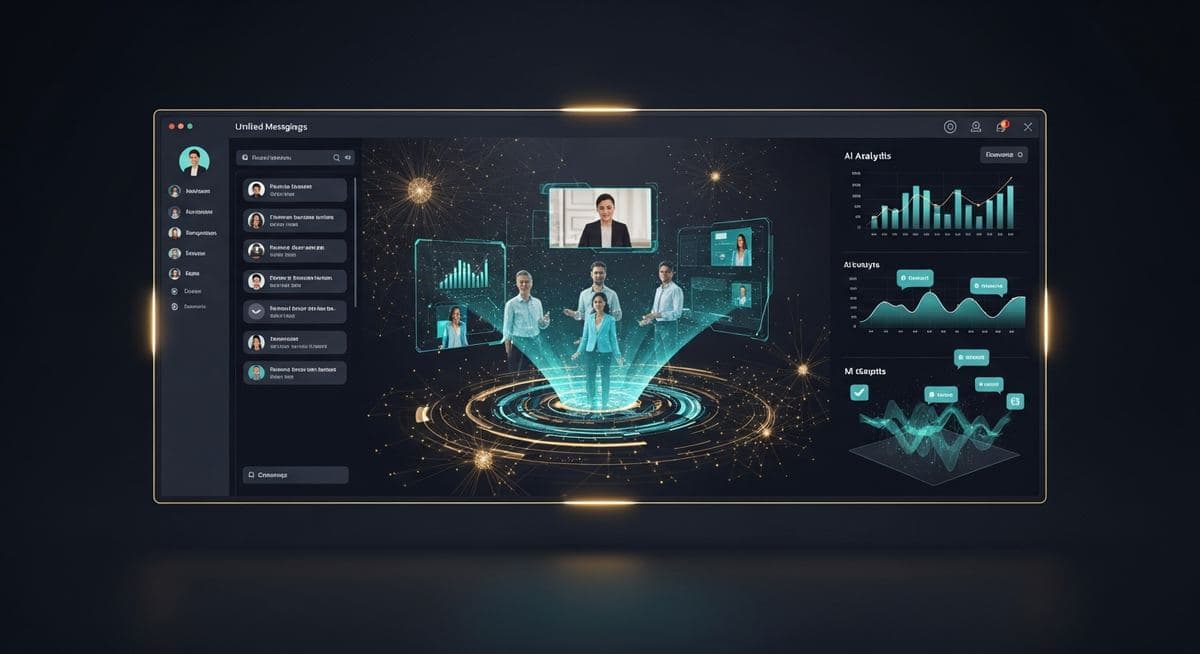
The future of business communications — what comes after the current UCaaS-dominated era — is a question we hear from clients planning multi-year technology strategies. Some of what's coming is clearly visible already (AI-augmented every-feature, deeper integration with workflow tools, continued contact center convergence). Some is harder to predict (the role of immersive video, the impact of generative AI on what "communication" even means in some workflows). Here's an honest read on what's likely vs. speculative.
What's Almost Certain
A few directions look very likely to continue:
- AI in every feature — transcription, summarization, translation, sentiment analysis, and coaching suggestions will be table-stakes capabilities across UCaaS platforms within the next 24 months
- Voice as a feature, not a platform — the trend toward voice being one capability among many inside collaboration platforms (rather than its own product) will continue. Standalone PBX-style products are increasingly niche.
- Contact center / UCaaS convergence — the line between employee-facing and customer-facing voice will keep blurring. Single-platform deployments will become the default for businesses with under 200 contact center agents.
- Compliance and data governance maturity — vendors will continue investing in HIPAA-eligible configurations, data residency options, audit logging, and the controls customers need to satisfy regulatory requirements
- Endpoint diversity — the mix of how people communicate will keep diversifying: less desk-phone, more mobile, more soft client, growing share of communication happening in the flow of work rather than during dedicated "call time"
What's Plausible but Uncertain
A few directions are plausible but their pace and ultimate shape are less clear:
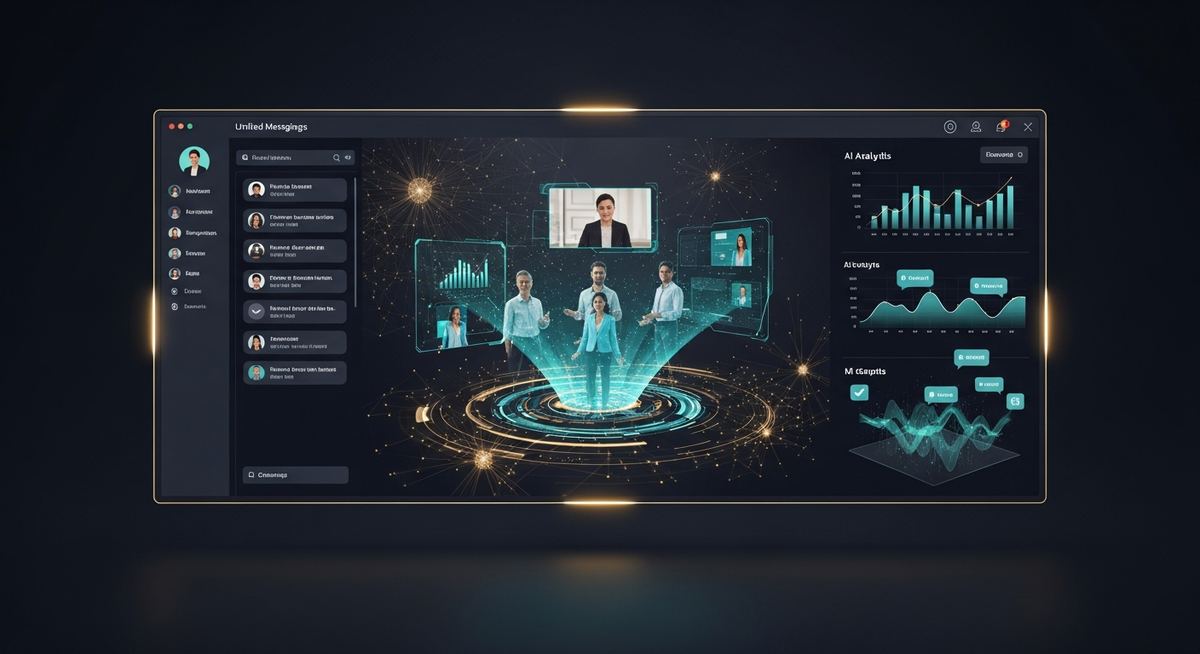
Spatial and immersive video — the technology for immersive video meetings exists (Apple Vision Pro, Meta Quest enterprise editions) but business adoption beyond demos is limited. Whether this becomes mainstream within five years or stays niche depends heavily on hardware cost curves and whether the productivity gain materializes for typical knowledge work.
AI agents handling routine calls — generative AI is becoming good enough to handle a meaningful slice of routine inbound calls (scheduling, basic customer service, common Tier 1 IT support). The technology is real; what's less clear is which industries adopt it widely and how customers respond to AI-handled interactions when they realize what's happening.
Voice biometrics replacing other auth — voice as an identity factor has obvious appeal in contact center contexts. Whether it becomes a primary authentication factor or stays a supplementary signal depends on accuracy, fraud resistance, and customer acceptance.
What's Probably Hype
A few directions that get a lot of marketing attention but probably won't meaningfully change business communications:
"The metaverse for work" was a 2022 narrative that has largely faded; the practical use cases haven't materialized. Predictions of voice technology completely replacing typed communication run into the simple fact that text is faster and more searchable for most knowledge work. Predictions that "video will replace voice" understate how often a voice-only call is preferable for time-sensitive or sensitive conversations.
How to Plan Around This
For businesses making multi-year decisions about communications infrastructure, the practical framing: optimize for flexibility, not for any specific bet on the future. That means picking platforms with strong APIs and integration capabilities (so new tools can connect to your communications layer), avoiding single-vendor lock-in for critical capabilities, building user training cultures that adapt to feature change (since the features will keep changing), and treating communications infrastructure as a multi-year capability investment rather than a one-time procurement.
If you'd like help scoping a communications strategy that's resilient against the next wave of change, a conversation with our team can map your current position and the practical next steps.
Leonidas is a managed IT services provider, cybersecurity consulting firm, and unified communications consultancy serving businesses across industries. We offer free 30-minute assessments. Contact us or call +1 (888) 790-8777.