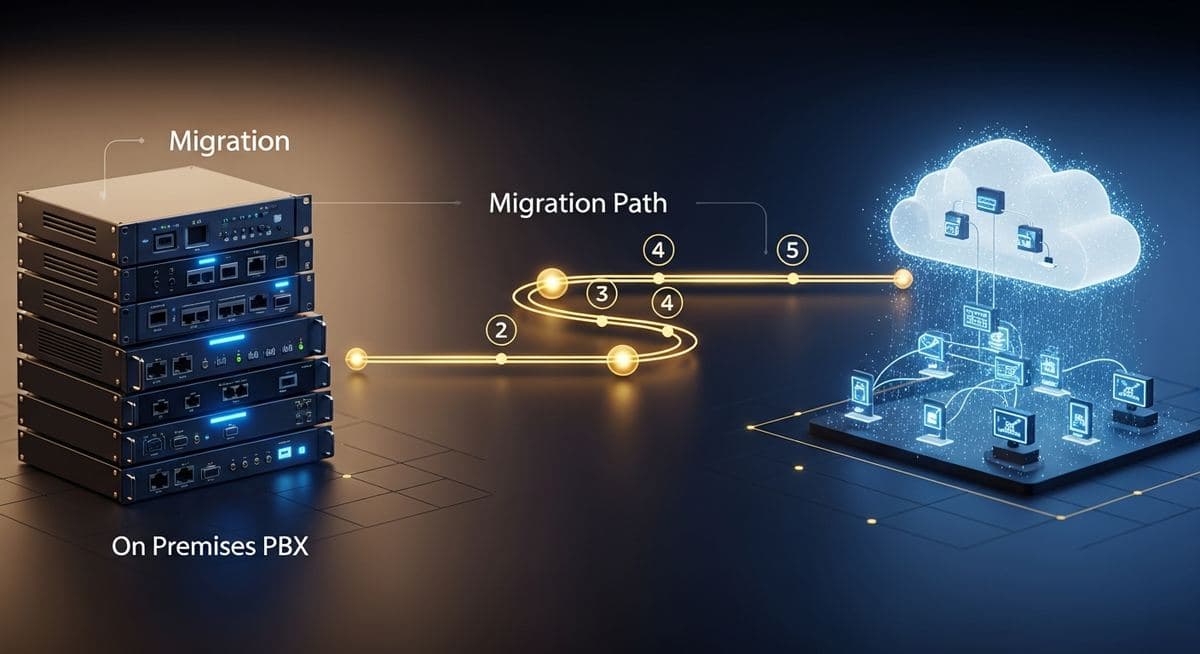
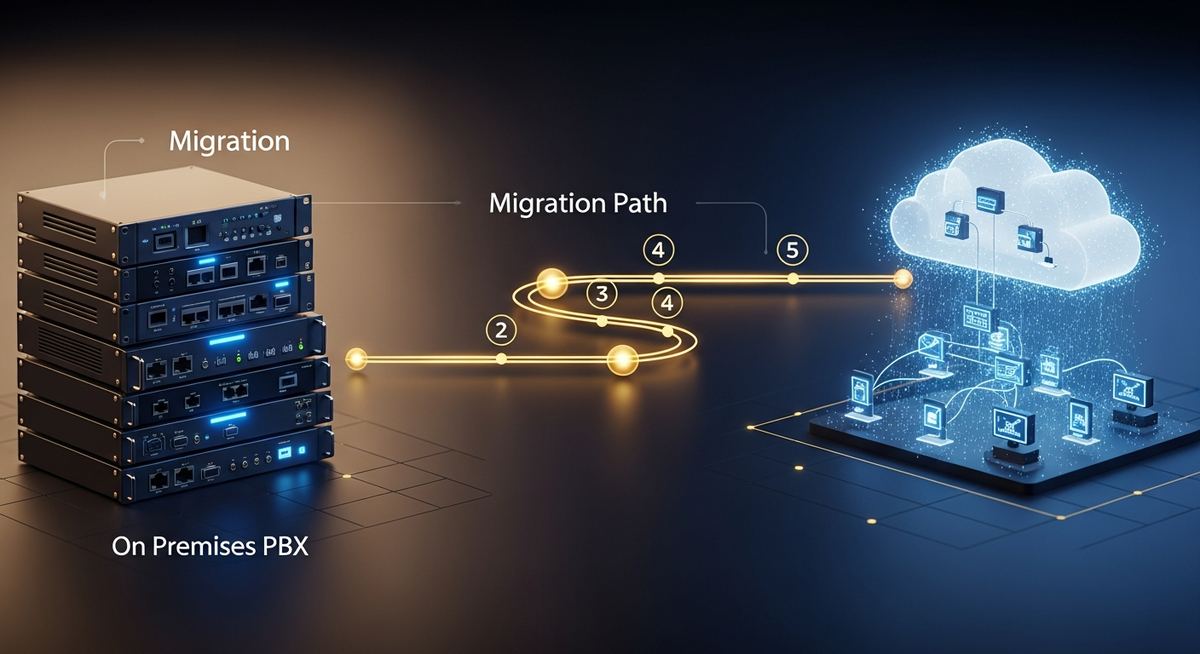
Cloud phone migration — moving your business phone system from on-premises PBX to a cloud-hosted platform — is one of the better-trodden modernization projects out there. The technology is mature, the vendors are established, and the playbook is well-known. What still trips businesses up is the execution: small decisions made early in the migration that create big problems later. Here's what the migration looks like when it goes well, with focus on the decision points that determine outcomes.
The Migration Phases
A cloud phone migration typically runs in five distinct phases:
- Discovery and design (2-4 weeks) — document current state, define future state, select vendor, design call flows and integrations
- Network and infrastructure readiness (2-4 weeks) — bandwidth, QoS, Wi-Fi tuning, firewall configuration, any required hardware procurement
- Pilot deployment (2-4 weeks) — small user group on the new platform, in parallel with the legacy system, with active feedback loops
- Phased rollout (3-8 weeks depending on size) — department-by-department migration to the new platform with the legacy still available as a fallback
- Number porting and decommission (2-4 weeks) — official porting of phone numbers, retirement of legacy circuits and equipment
Total elapsed time for a typical 50-150 person business is 12-20 weeks. Larger or more complex environments take longer.
The High-Stakes Decisions Made Early
Four decisions during the discovery and design phase have outsized impact on the rest of the project:
Vendor selection — chosen well, the vendor matches your requirements and integration needs. Chosen poorly, the team spends the next year working around platform gaps.
Endpoint strategy — desk phones, softphones, or hybrid. Buying desk phones for users who won't use them wastes capital; pushing softphone-only on roles that need desk phones creates friction. The strategy should match how each role actually works.
Call flow design — the future-state call flow (who calls reach, when, with what auto-attendant logic) gets locked in early. Changing it later is more work than getting it right the first time.
Integration scope — which business apps does the phone system connect to, and how deeply. CRM screen-pop, calendar awareness, message threading — these are easier to scope before the platform is live than to bolt on afterward.
Number Porting Reality
Number porting is the most-feared step of cloud phone migration, and often the smoothest if planned well. The mechanics: you authorize the new carrier to request the number from the current carrier, the current carrier confirms the request and schedules a port date, the new carrier provisions the number on the new platform, and at the scheduled date the number switches over — usually within a few hours, sometimes with minimal user-visible disruption.
What goes wrong: address mismatches between the current carrier's records and the porting request (causes rejection and delay), porting requests for numbers still under contract (carrier can refuse to release until contract terms allow), and main number porting timed poorly with respect to business operations (always port main numbers on slow days, with the project team available).
What "Done" Looks Like
The cutover isn't done when the new system is live — it's done when several criteria are met: all users trained and confident on the new platform, integration with business apps tested and working, call quality monitored and meeting expectations across the user base, legacy system fully retired with circuits disconnected, contracts canceled with appropriate notice, and any post-migration issues triaged and resolved.
The post-cutover support period typically runs 30-60 days with active monitoring and rapid issue response. Skipping that period saves time but produces lingering issues that surface as user complaints months later. For most clients, we run cloud phone migrations as a defined project with explicit success criteria and a clean handoff to ongoing managed services. A conversation with our team can scope the migration for your specific environment.
Leonidas is a managed IT services provider, cybersecurity consulting firm, and unified communications consultancy serving businesses across industries. We offer free 30-minute assessments. Contact us or call +1 (888) 790-8777.