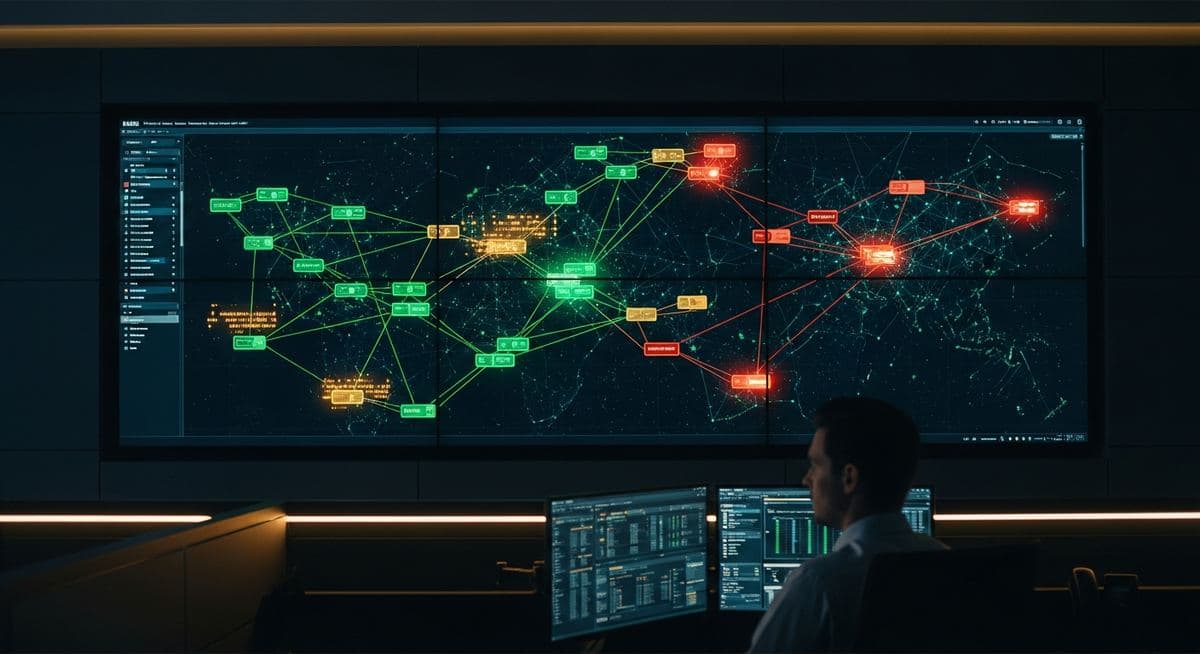
Network monitoring is the discipline of catching problems before users do. The difference between IT teams that look proactive and IT teams that look reactive is mostly the quality of their monitoring. Done well, network monitoring surfaces issues — slow circuits, degrading hardware, abnormal traffic patterns, security events — early enough to fix them before they become outages. Done poorly, it generates alert noise that no one acts on. Here's what good monitoring includes and what most SMB networks are missing.
The Layers Monitoring Has to Cover
Effective network monitoring spans multiple layers:
- Connectivity — is each circuit up, what's its current latency and packet loss, what's its utilization
- Devices — are switches, routers, access points, and firewalls all healthy, what's their CPU and memory state
- Performance — what's network latency between key endpoints, are SaaS application paths performing acceptably
- Wireless — what's client density, signal quality, retransmission rates by access point
- Security — what traffic is flowing where, what's anomalous, what's malicious
- Application experience — synthetic transactions or end-user telemetry confirming key applications are responsive
Most SMB networks have monitoring on the first two layers. The other four are where the more sophisticated visibility lives and where the bigger gaps usually are.
The Difference Between "Up/Down" and Real Visibility
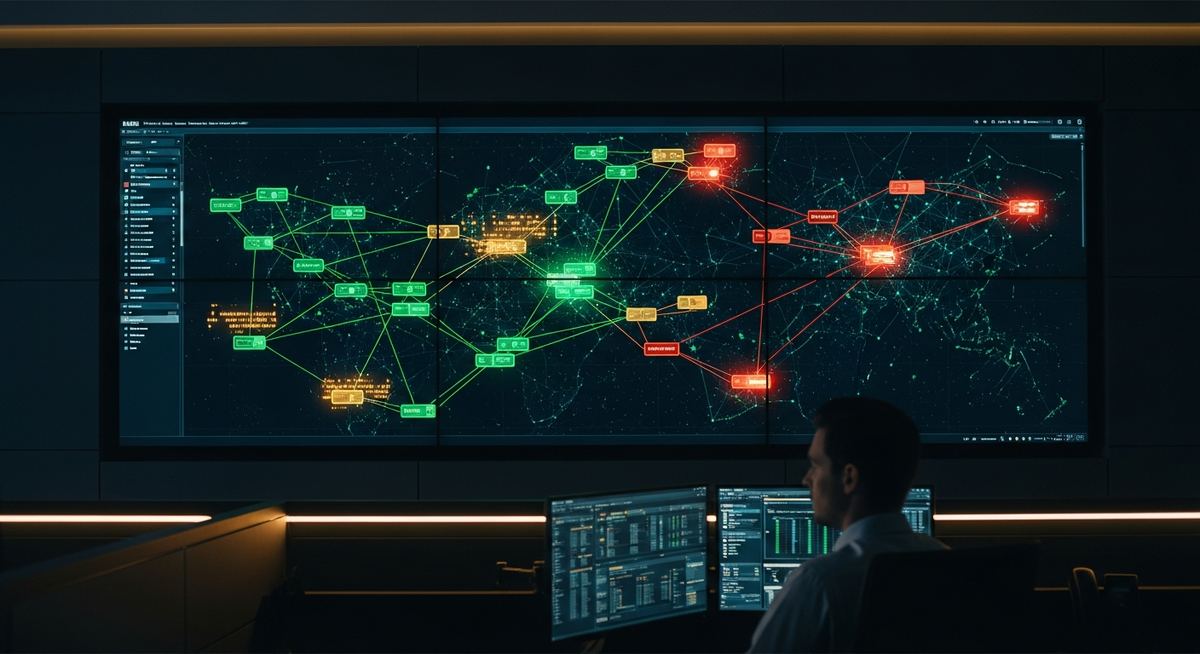
Basic monitoring tells you whether something is up or down. That's necessary but not sufficient. Real visibility tells you whether something is performing well, degrading toward failure, or behaving anomalously — long before "down" happens.
The pattern of incidents that visibility-level monitoring catches and basic monitoring misses: switches with steadily climbing temperatures that fail weeks later, internet circuits with packet loss that's hurting performance but not visible from up/down tests, wireless access points serving more clients than they're sized for, traffic patterns that indicate compromise or data exfiltration well before any system reports compromised, and SaaS applications degrading from a specific carrier path that user complaints would eventually surface.
The Tooling Layer
Practical monitoring tooling for SMB and mid-market networks:
- RMM platforms — typical of MSP-managed environments, providing device and connectivity monitoring as a baseline
- Vendor management consoles — Meraki, Fortinet, Cisco DNA Center, etc. provide native monitoring for their gear with reasonable depth
- SD-WAN analytics — for businesses on SD-WAN, the platform provides circuit and application-path visibility
- SaaS application monitoring — tools like ThousandEyes, Catchpoint, or Nyansa specifically monitor SaaS path performance
- SIEM and security monitoring — for the security-events layer
- Network packet brokers and full packet capture — for the highest visibility deployments
Most SMBs don't need the full enterprise stack. The right starting point is RMM plus vendor management consoles, with selective additions based on specific operational pain.
The Alert Discipline Problem
The most common monitoring failure isn't lack of monitoring — it's monitoring that generates noise. When 80% of alerts are false positives or low-priority informational events, real alerts get lost in the noise. Effective monitoring requires alert discipline:
- Tune detection thresholds to actually-actionable events, not "anything different from baseline"
- Aggregate related events so a cascading failure produces one alert with context, not 200 separate alerts
- Define escalation paths — who gets paged for what at what severity
- Review alert volume monthly and tune out the noise sources
- Track which alerts produced real action; alerts that never produce action should be re-evaluated
What Monitoring Should Tell You
A monitoring practice that's working answers these questions on demand: what's the current health of every network component, what circuits are degrading or trending toward problems, what application paths are slower than expected, what security events warrant attention, what's the trend on each of the above over the past 30 days, and what should change about the network based on this visibility. If your current monitoring can't answer those, that's the gap. A conversation with our team can scope what better monitoring looks like for your environment.
Leonidas is a managed IT services provider, cybersecurity consulting firm, and unified communications consultancy serving businesses across industries. We offer free 30-minute assessments. Contact us or call +1 (888) 790-8777.