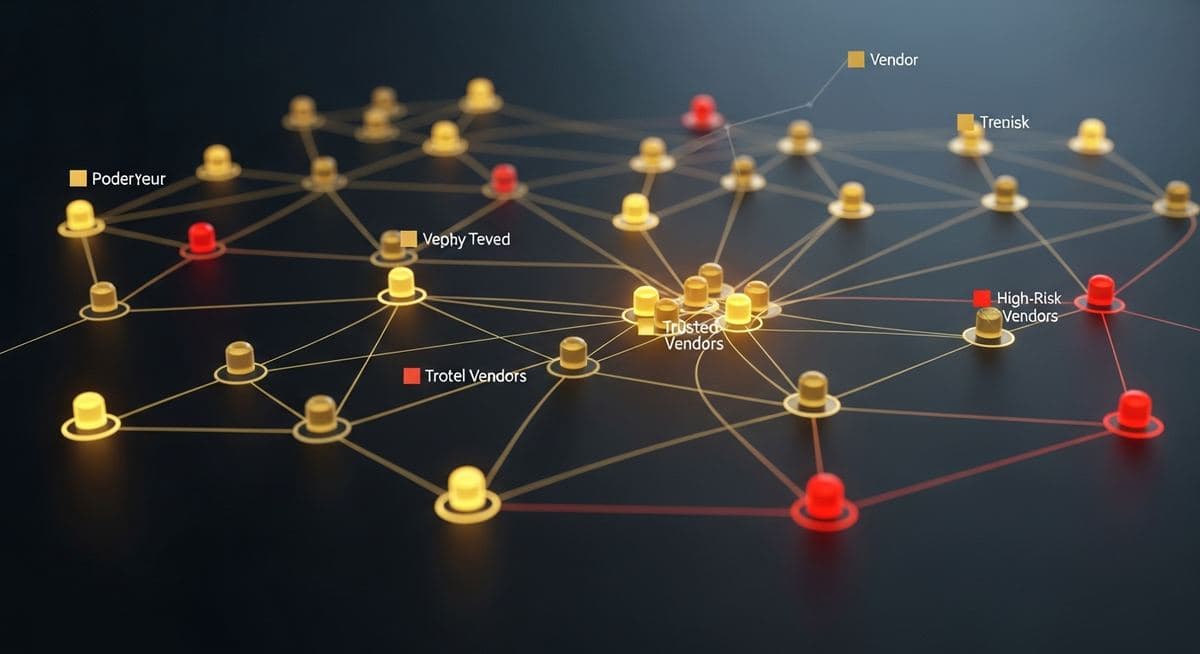
Vendor risk management is the discipline of understanding, evaluating, and controlling the security risk introduced by third parties that access your business systems or data. Every modern business runs on a network of vendors — SaaS apps, MSPs, contractors, payment processors, marketing platforms — and each one extends your security perimeter to include their security posture. The dominant pattern in recent breaches has been vendor compromise pivoting into the customer base. Here's how to build a vendor risk management practice that actually reduces this exposure.
What VRM Includes
A working vendor risk management practice covers:
- Vendor inventory — every third party with access to business systems, data, or operations
- Risk classification — vendors tiered by data sensitivity, access level, and business criticality
- Pre-engagement due diligence — security review before signing contracts with new vendors
- Contractual security requirements — DPA, BAA, security clauses appropriate to the relationship
- Ongoing monitoring — periodic reassessment of vendor security posture during the relationship
- Incident response coordination — what happens if the vendor has a security incident affecting customers
- Offboarding controls — data return, access revocation, retention obligations when relationships end
The Vendor Tier Structure
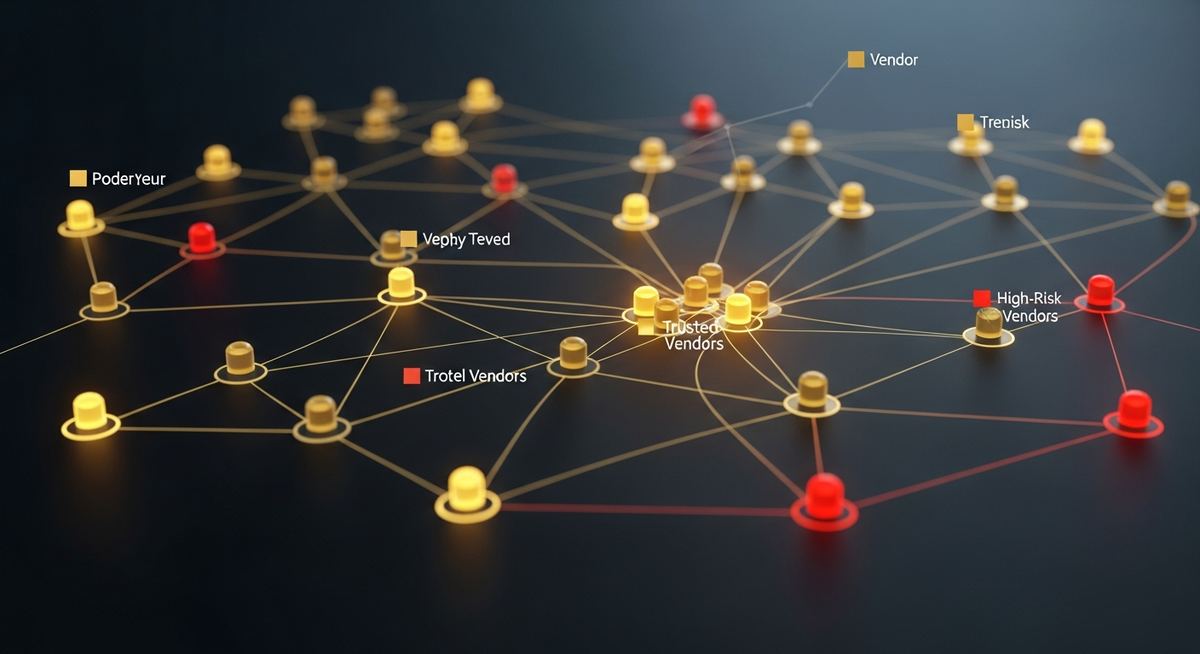
Not all vendors warrant the same scrutiny. A useful tier structure:
- Tier 1 — Critical: vendors with broad access to business systems, sensitive data, or operational dependency. MSPs, financial services, customer data platforms, payroll processors. Detailed security review, contractual security requirements, annual reassessment.
- Tier 2 — Significant: vendors with moderate access or non-sensitive but substantive data. Marketing platforms, CRM, productivity SaaS. Streamlined security review, standard contractual terms, biennial reassessment.
- Tier 3 — Limited: vendors with minimal access or low-risk integrations. Most utility SaaS, single-purpose tools. Minimal review, standard terms, reassessment only if scope changes.
The tiering allows VRM effort to focus where it matters. Treating every vendor with Tier 1 rigor exhausts the team; treating every vendor as Tier 3 misses real risk.
The Due Diligence Practice
For Tier 1 and Tier 2 vendors, due diligence before engagement typically includes:
- SOC 2 Type II report review (or equivalent attestation)
- Security questionnaire covering relevant controls — MFA, encryption, incident response, etc.
- Privacy and data handling documentation — DPA, sub-processor disclosure, data residency
- Insurance verification — cyber insurance limits, breach response provisions
- Incident history review — public information about past breaches and how they were handled
- References from similar customers, with specific questions about the vendor's security responsiveness
The output of due diligence isn't pass/fail — it's a risk classification that informs the relationship terms and ongoing oversight.
The Contractual Layer
Contracts with Tier 1 vendors should include specific security provisions:
- Notification timelines for security incidents affecting the customer
- Audit rights or attestation requirements
- Specific control requirements (MFA, encryption, etc.)
- Data handling and return obligations at relationship end
- Insurance maintenance requirements
- Subcontracting limitations
- Liability provisions for security incidents caused by the vendor
Generic master services agreements don't capture this. Schedule A or B exhibits typically carry the security-specific terms.
Ongoing Monitoring
Initial due diligence isn't enough. Vendor security posture changes over time — acquisitions, leadership changes, incidents, business stress can all degrade security. Ongoing monitoring includes:
- Periodic reassessment (annual for Tier 1, biennial for Tier 2)
- Monitoring for public incidents involving the vendor
- Tracking changes in the vendor's certifications or attestations
- Review of access logs showing what the vendor is actually doing in your environment
- Updates to the risk classification as the relationship evolves
The Cyber Insurance and Compliance Drivers
Beyond direct security value, VRM is increasingly required by cyber insurance underwriters and compliance frameworks. Insurance applications routinely ask about VRM practices; SOC 2, HITRUST, CMMC, and other frameworks include explicit VRM controls. Building VRM capability satisfies multiple drivers at once.
For most SMBs, VRM doesn't require a dedicated platform — a spreadsheet inventory with disciplined process produces most of the value. Larger organizations and those with many high-tier vendors benefit from VRM platforms (Vendr, Whistic, OneTrust, Vanta) that automate questionnaire collection and ongoing monitoring. A conversation with our team can scope VRM implementation for your business.
Leonidas is a managed IT services provider, cybersecurity consulting firm, and unified communications consultancy serving businesses across industries. We offer free 30-minute assessments for businesses evaluating their IT and security posture. Contact us or call +1 (888) 790-8777.