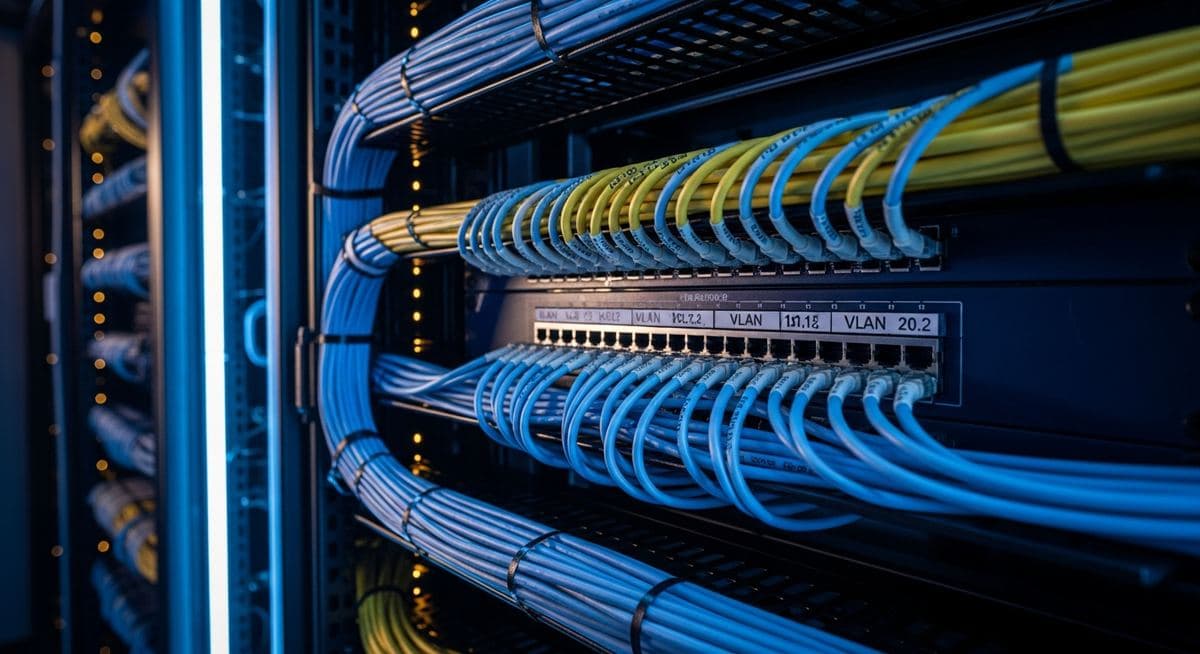
Structured Cabling for Business — Every conversation about network performance, Wi-Fi coverage, or VoIP quality eventually leads back to the physical layer: the cables in your walls and ceilings. Structured cabling is the organized system of cabling, hardware, and pathways that forms the physical foundation of your network. It's invisible when it's done right. It's expensive and disruptive when it's done wrong. And unlike most technology decisions, it's not easily reversed — cable in the walls stays there.
What Structured Cabling Is and What It Includes
Structured cabling is a standardized approach to cabling infrastructure defined by the TIA-568 standard and the BICSI telecommunications distribution methods manual. It treats cabling as a system — not a collection of individual cable runs — with consistent specifications, termination standards, and documentation requirements.
A complete structured cabling system includes:
- Horizontal cabling — the cable runs from the telecommunications room (TR) to individual work area outlets, typically Cat6 or Cat6A for modern installations
- Work area components — wall plates, jacks, and patch cables at the desk or device location
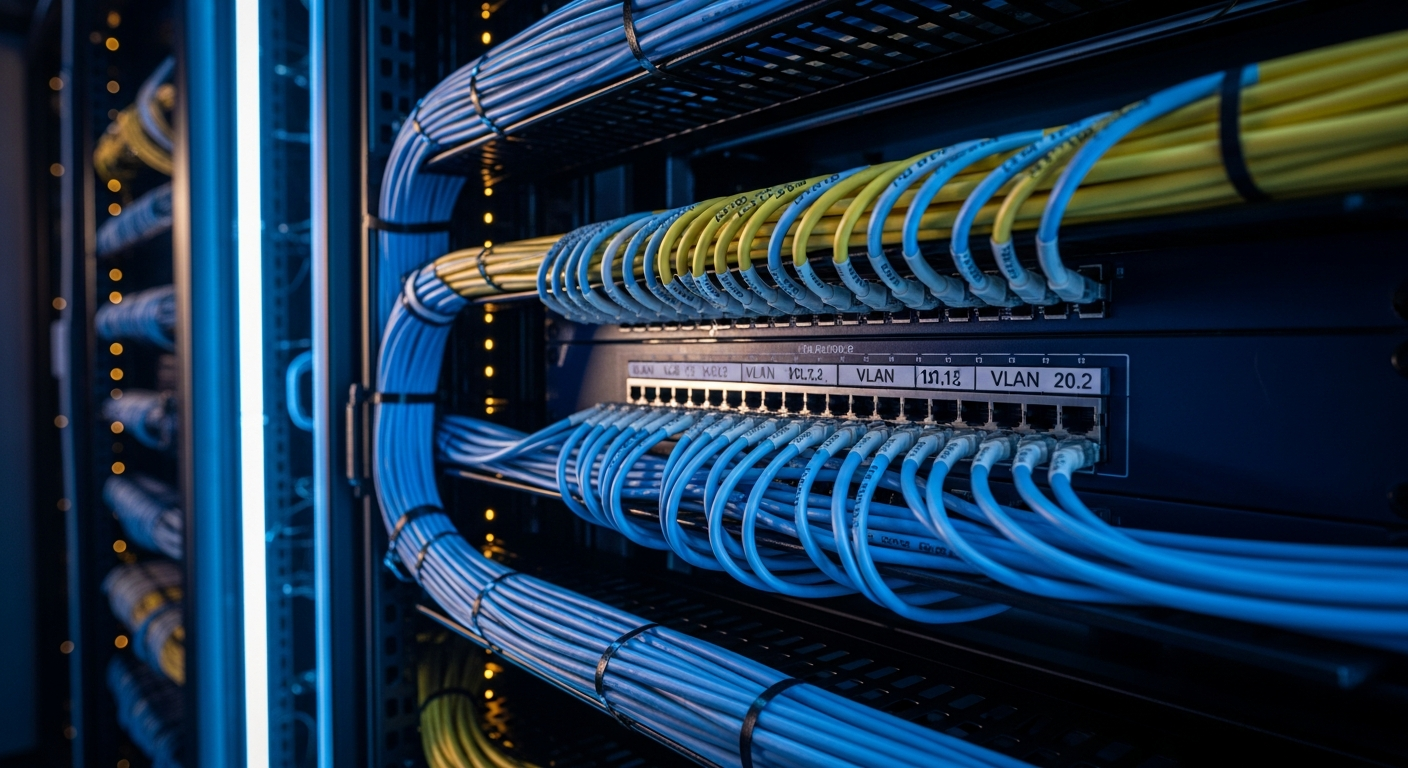
- Telecommunications room — the central point where horizontal runs terminate, including patch panels, cable management, and rack infrastructure
- Backbone cabling — connections between telecommunications rooms in multi-floor or multi-building environments, often fiber
- Pathways — conduit, cable trays, and j-hooks that provide organized routing for cable runs
Cat5e vs. Cat6 vs. Cat6A: What to Install in 2026
The cable category question comes up in every cabling conversation. The short answer for any new installation in 2026:
- Cat5e — supports up to 1 Gbps at 100 meters. Adequate for current speeds but provides no headroom. Not recommended for new installations.
- Cat6 — supports 1 Gbps reliably and 10 Gbps at shorter distances (up to ~55 meters). Good balance of cost and performance for most office environments. The standard choice for the majority of new installations.
- Cat6A — supports 10 Gbps at full 100-meter runs. Required for 10GbE to the desktop, high-density Wi-Fi 6/6E/7 access points, and future-proofing for bandwidth-intensive environments. Higher cost and larger cable diameter require more careful pathway planning.
For most commercial environments today, Cat6 is the right answer for horizontal runs. Cat6A is worth the premium for access point drops and any location likely to need 10GbE within the cable's lifetime. Mixing categories in the same installation is acceptable — run Cat6A to access points, Cat6 to desks.
Why Cheap Cabling Installations Cost More
The labor cost of a cabling installation is typically 60–70% of the total project cost. The cable itself is a relatively small portion. This means that cutting corners on materials — using off-brand cable, substandard connectors, or skipping proper testing — saves a fraction of the total cost while creating problems that are expensive to diagnose and fix later.
Common problems from poorly installed cabling: intermittent connectivity issues that take hours to troubleshoot, failed gigabit or 10G link negotiations due to marginal cable performance, excessive crosstalk affecting VoIP quality, and cable runs that fail testing and have to be redone at full labor cost. A proper installation includes end-to-end testing of every run with a cable certifier that documents pass/fail against the relevant standard. If your cabling contractor doesn't provide test reports, ask why.
Documentation: The Part Everyone Skips
A cabling installation without documentation creates a problem that compounds over years. When a cable run needs to be traced, when a port needs to be identified, or when a new contractor needs to understand the environment, documentation is the difference between a quick answer and an hour of tracing cables by hand. Proper documentation includes as-built drawings showing cable routing, a port-to-patch-panel map, and test reports for every run.
At Leonidas, our network engineering practice includes structured cabling design and installation management for commercial environments across industries. If you're planning a new buildout, a renovation, or refreshing an aging cabling plant, reach out for a site assessment.
Leonidas is a managed IT services provider, cybersecurity consulting firm, and unified communications consultancy serving businesses across industries. We offer free 30-minute assessments. Contact us or call +1 (888) 790-8777.