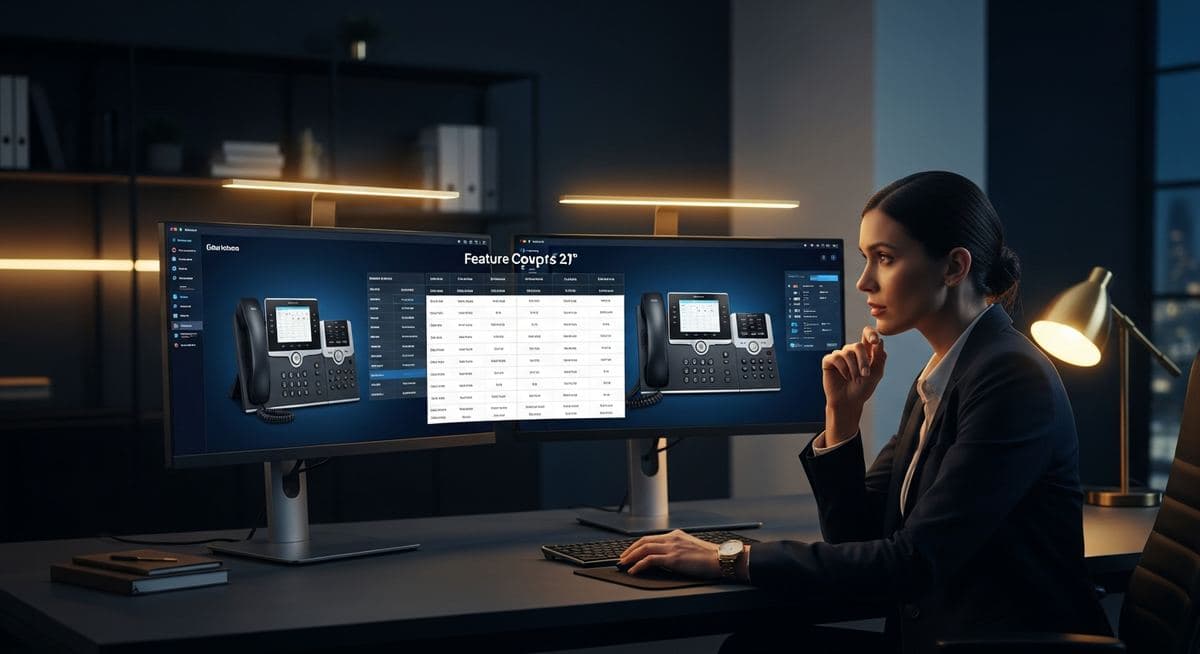
The RingCentral vs. Microsoft Teams Phone comparison is the single most-frequent UCaaS decision we walk businesses through. Both platforms are mature, both deliver enterprise-grade voice, and both have legitimate use cases where they're the right answer. The "best" choice depends on factors that the platforms don't make easy to compare side-by-side. Here's an honest framework for the decision.
The Quick Take
Microsoft Teams Phone is usually the right answer when your business is already heavily invested in Microsoft 365 and Teams is the collaboration hub, you have moderate voice feature requirements, and you'd prefer one vendor relationship and one admin console for collaboration plus voice. RingCentral is usually the right answer when you have more advanced voice requirements (analytics, contact center, complex routing), you operate in an environment where Microsoft 365 isn't the dominant productivity platform, or you need international voice capabilities that RingCentral's global footprint serves better. Both are defensible choices; the better one depends on the specifics.
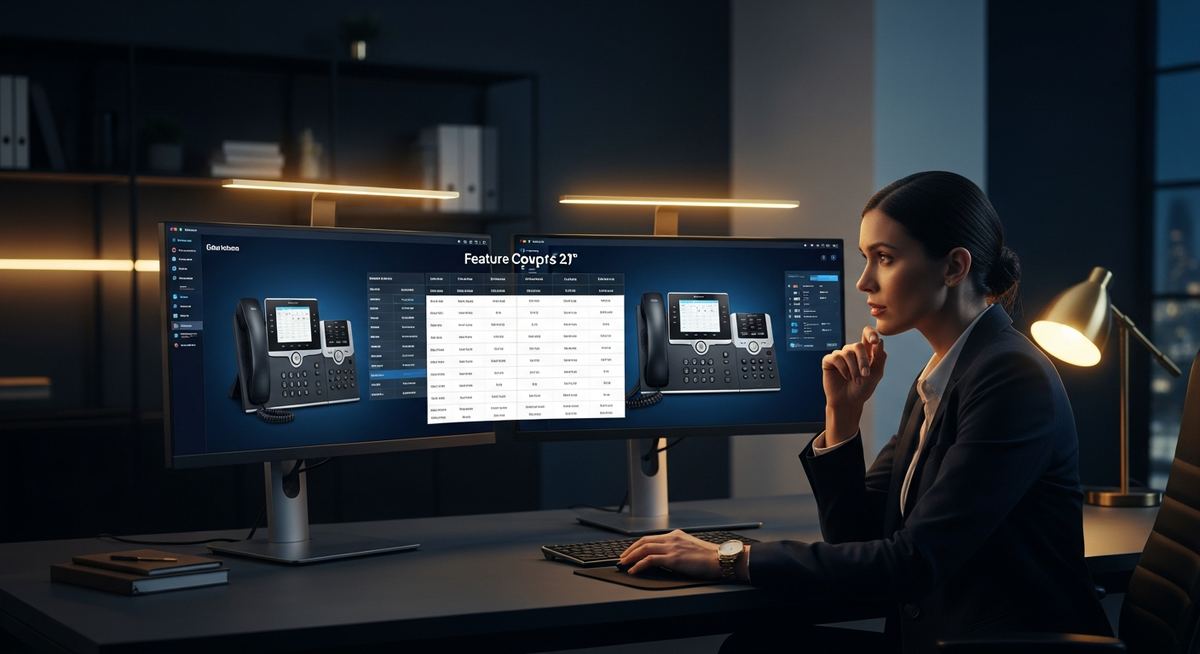
Where Each Platform Has the Edge
Microsoft Teams Phone advantages:
- Native integration with Teams — calling is just another modality alongside chat and meetings, no separate app
- Single vendor relationship for productivity, collaboration, and voice
- Identity integration with Microsoft Entra ID is built-in
- Licensing can roll into existing E5 bundles, reducing incremental cost
- For Microsoft-centric organizations, fewer integrations to maintain
RingCentral advantages:
- Deeper voice-specific feature set — analytics, advanced routing, contact center capabilities
- Stronger international voice presence and number portability across countries
- More mature contact center offering (RingCX) for businesses with customer-facing teams
- Independent of Microsoft 365 — works equally well in Google Workspace or hybrid environments
- Often better call quality SLAs and reporting transparency
- Voice-first product orientation tends to deliver faster voice-specific feature releases
The Cost Comparison Is Not Straightforward
Headline pricing is similar — both run roughly $20-50 per user per month depending on tier. The total cost picture differs:
Teams Phone licensing depends heavily on your existing Microsoft 365 stack. If you're on E5, calling capability is included. If you're on E3 plus separate Teams Phone licensing, the cost adds up. For Business Premium plans, Teams Phone is an add-on. The math is complex and the right answer depends on what licensing you already have.
RingCentral pricing is more straightforward — per-user-per-month for the features in the chosen tier, with international calling and contact center as identifiable add-ons. It's easier to compare across vendors but requires standalone cost beyond your existing licensing.
The Operational Considerations That Matter
Beyond features and cost, the operational fit dimensions to consider:
- Migration complexity — Teams Phone migrations are typically simpler in Microsoft-centric environments. RingCentral migrations from legacy PBX systems are well-trodden territory but require number porting and endpoint transitions.
- Support and admin model — Microsoft's enterprise support is strong but generic; RingCentral's voice-specialized support is often more responsive to telephony-specific issues
- Integration with CRM and business apps — both have strong integrations but the specific quality varies by app. Worth checking the apps your business actually depends on.
- Contact center maturity — if you need real contact center capabilities, RingCentral's offering is currently more mature than Microsoft's Teams-based options
Making the Call
A simple decision flow: are you already on Microsoft 365 E5, with Teams as your collaboration hub, with moderate voice requirements and no significant contact center need? Teams Phone is likely the right answer. Do you have advanced voice or contact center requirements, operate in a non-Microsoft-dominant environment, or need international capabilities? RingCentral usually fits better. For businesses in the middle, both are legitimate and the choice often comes down to existing vendor relationships and admin team preferences. If you want help running the comparison for your specific environment, a conversation with our team can structure the evaluation.
Leonidas is a managed IT services provider, cybersecurity consulting firm, and unified communications consultancy serving businesses across industries. We offer free 30-minute assessments. Contact us or call +1 (888) 790-8777.