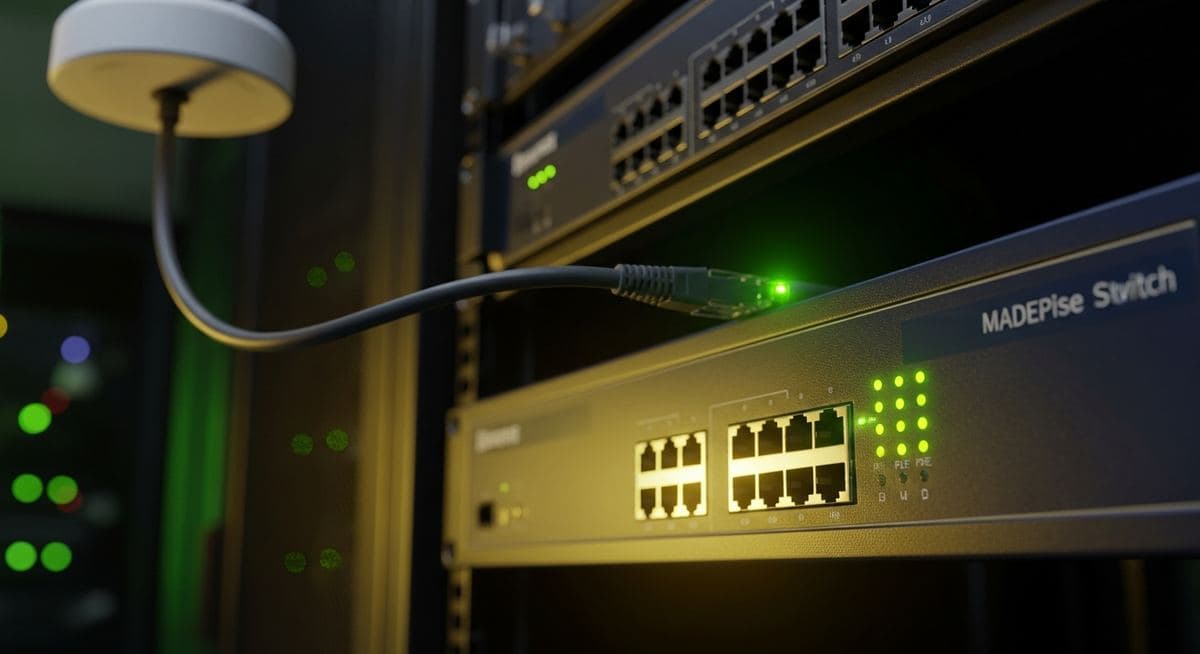
Power over Ethernet (PoE) — Walk through most modern offices and you'll find IP desk phones, wireless access points, IP security cameras, and door access controllers all connected to the network and powered through a single Ethernet cable. That's PoE — Power over Ethernet — and it's one of those infrastructure decisions that quietly makes everything else easier. If you're planning a new office, a network refresh, or adding any of these device types, understanding PoE before you buy switches and run cable saves significant time and money.
What PoE Is and How It Works
PoE is an IEEE standard that allows network switches to deliver electrical power over standard Ethernet cabling (Cat5e or better) to connected devices simultaneously with data. A PoE-capable switch detects whether a connected device can accept power, negotiates the appropriate wattage, and delivers it — no separate power outlet, no wall wart, no separate power cable needed at the device.
The practical effect: a wireless access point mounted on a ceiling only needs one cable run. An IP phone on a desk only needs one cable. An IP camera in a parking lot or hallway only needs one cable — even if there's no electrical outlet nearby.
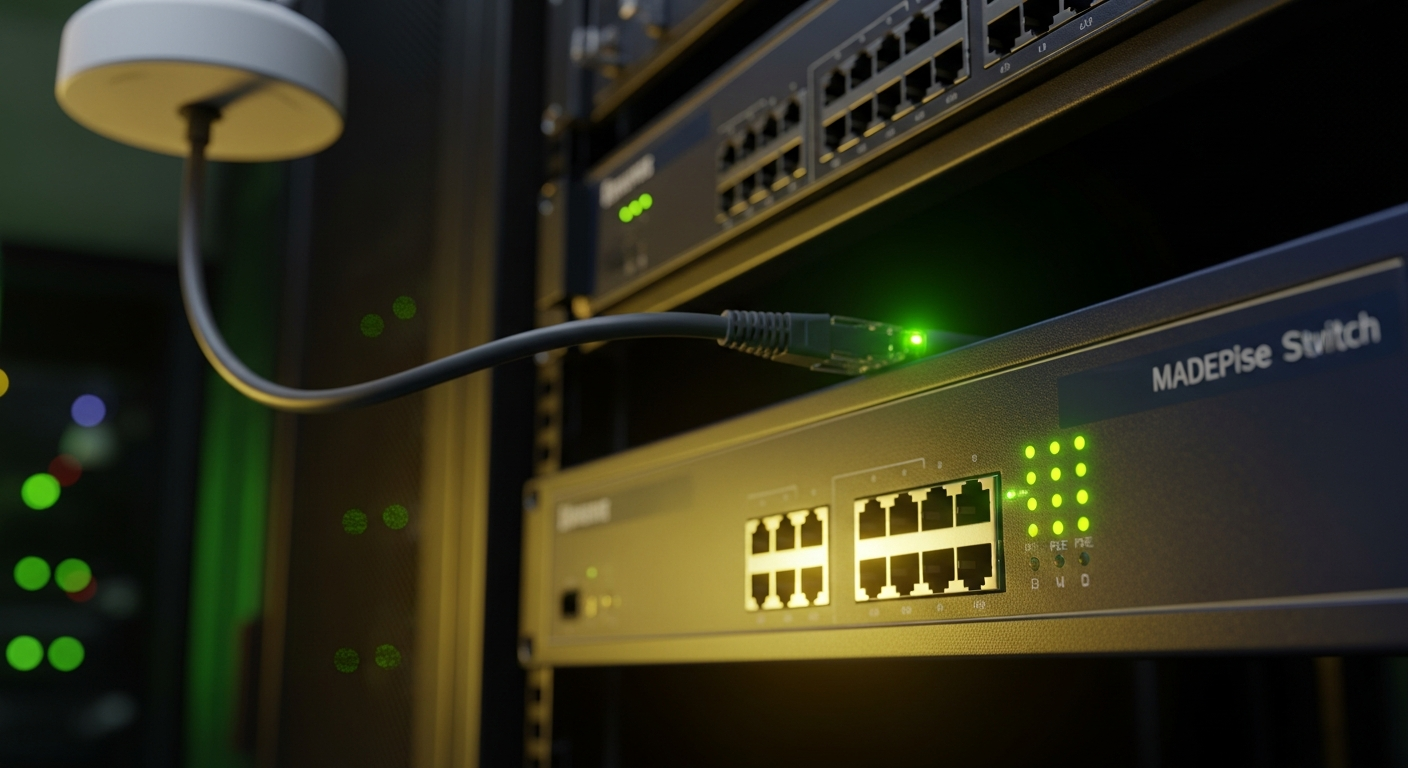
PoE Standards: What the Numbers Mean
Not all PoE is the same, and choosing the wrong standard creates problems during deployment. Here's what the main standards deliver:
- IEEE 802.3af (PoE) — up to 15.4W per port. Sufficient for basic IP phones, most IP cameras, and older wireless access points.
- IEEE 802.3at (PoE+) — up to 30W per port. Required for most modern wireless access points (especially Wi-Fi 6 and Wi-Fi 7), PTZ cameras, and video phones.
- IEEE 802.3bt (PoE++ / 4PPoE) — 60W (Type 3) or 90W (Type 4) per port. Required for high-performance access points, digital signage, thin clients, and some advanced cameras.
When selecting a PoE switch, you need to match the standard to the highest-wattage device you'll connect. More importantly, you need to account for total switch power budget — the aggregate wattage available across all PoE ports simultaneously. A 24-port switch may support PoE+ on every port but have a power budget that limits how many ports can be active at full power concurrently.
Common PoE Applications in Business
- VoIP / IP desk phones — almost universally PoE-powered. Eliminates the need for desk-level power outlets and simplifies phone deployment.
- Wireless access points — the most common PoE application. Access points in ceilings, walls, and outdoor locations benefit enormously from single-cable installation.
- IP security cameras — indoor and outdoor cameras can be deployed wherever Ethernet can reach, regardless of power outlet proximity.
- Door access control — electronic door strikes, card readers, and access control panels often use PoE, simplifying installation in door frames and entryways.
- Digital signage and thin clients — higher-wattage applications requiring PoE++ but increasingly common in lobby displays and kiosk deployments.
Planning a PoE Deployment
The questions to answer before purchasing switches for a PoE deployment:
- What devices will be PoE-powered? List every device type and its wattage requirement.
- What PoE standard does each device require? Verify against the device spec sheet, not the vendor marketing material.
- What's the total simultaneous power draw? Add up the wattage of all devices that will be active at once and confirm your switch's power budget exceeds this number with margin.
- What switch platform is right for the environment? For most business deployments, managed switches from Cisco Meraki, Aruba, or Cisco Catalyst provide the right combination of reliability, manageability, and PoE support.
Getting these decisions right during planning is substantially less expensive than discovering mismatches after installation. If you're planning a new office buildout or network refresh that includes PoE devices, Leonidas can help you design a switching infrastructure that works for your specific device mix and budget.
Leonidas is a managed IT services provider, cybersecurity consulting firm, and unified communications consultancy serving businesses across industries. We offer free 30-minute assessments for businesses evaluating their IT and security posture. Contact us or call +1 (888) 790-8777.