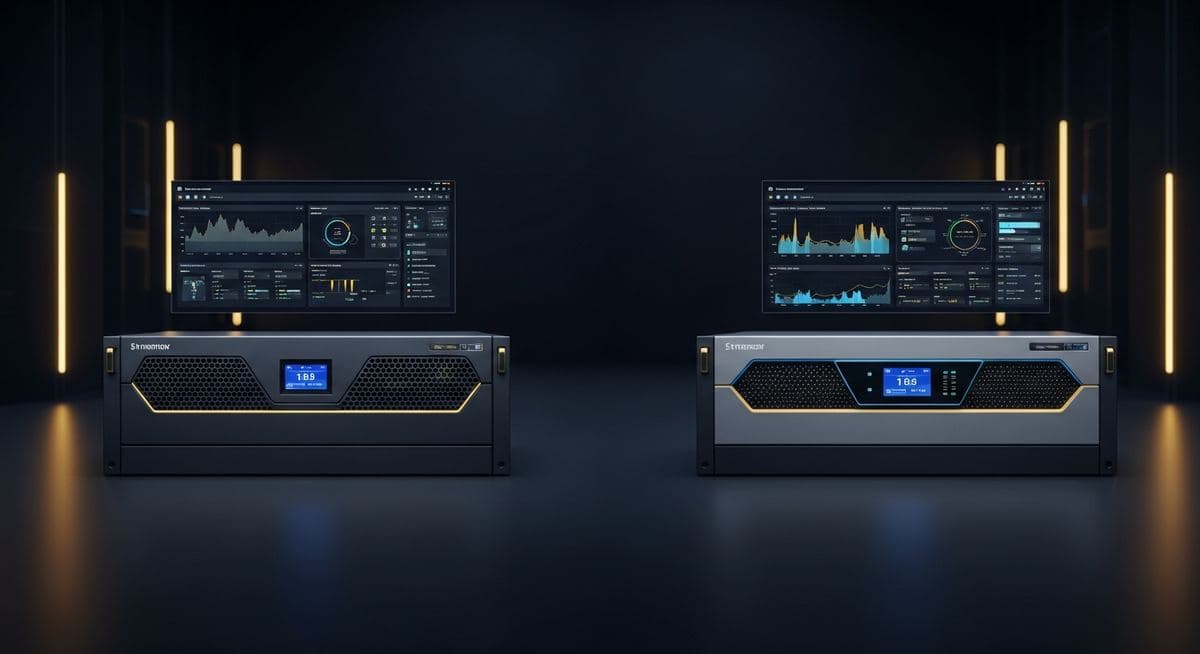
The Meraki vs. Fortinet firewall comparison is the most frequent SMB and mid-market network security decision we walk businesses through. Both are mature platforms, both have legitimate strengths, and both deliver effective security at the typical business scale. The right choice depends on what you're optimizing for. Here's an honest comparison.
The High-Level Read
Cisco Meraki is usually the right answer when ease of management is the priority, the business prefers a single-vendor stack across networking and security, the team running it isn't full-time network specialists, or the cloud-managed model fits your operational preference. Fortinet (FortiGate) is usually the right answer when security depth and feature breadth matter more than admin simplicity, your team has network security expertise to leverage the deeper capabilities, total cost of ownership is a primary concern (Fortinet typically costs less at equivalent capability), or you want broader integration with security operations tooling.
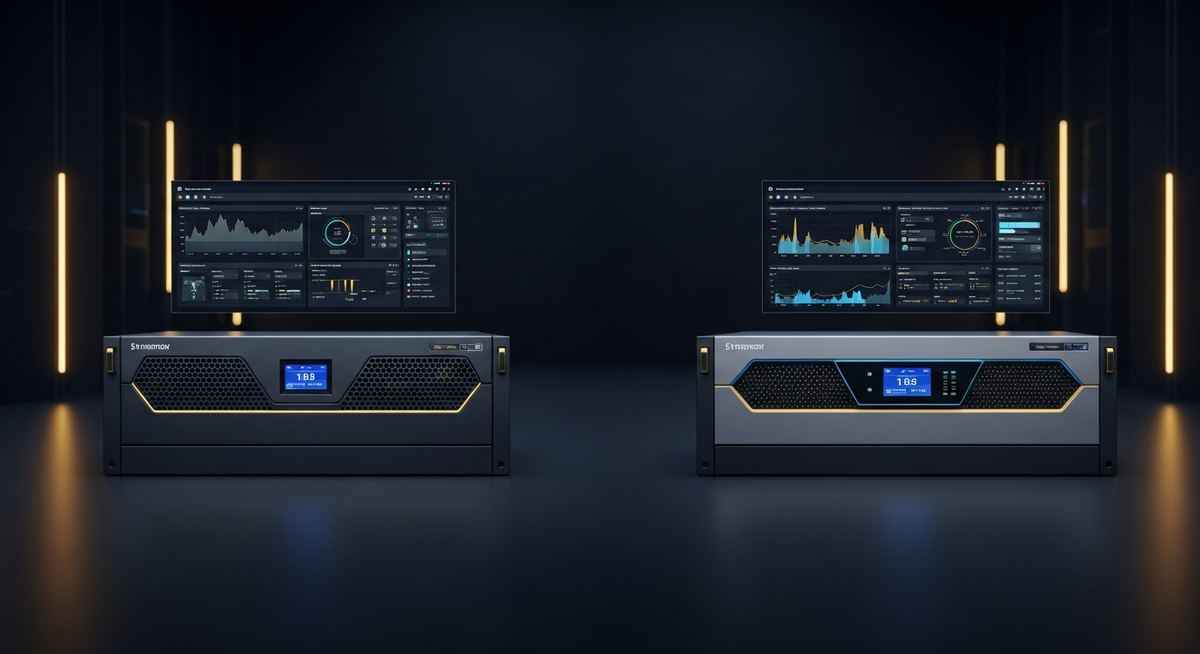
Where Meraki Has the Edge
- Cloud-managed simplicity — entire network managed from a single dashboard accessible from anywhere; no on-prem management server
- Lower operational complexity — admin interface designed for IT generalists; less specialized expertise required for daily operations
- Tight integration with Meraki switches and access points — single-vendor stack with unified management
- Quick deployment — devices ship pre-configured to the dashboard; minimal on-site work
- Strong wireless capabilities when combined with Meraki APs
- Visibility and analytics — built-in client analytics, application identification, and reporting in the dashboard
Where Fortinet Has the Edge
- Deeper security feature set — more granular IPS configuration, application control, web filtering, sandboxing options
- Better security operations integration — FortiAnalyzer, FortiSIEM, FortiSOAR ecosystem for security teams
- Lower licensing cost at equivalent capability — particularly noticeable at mid-market scale
- Stronger threat intelligence and FortiGuard services — Fortinet's security research feeding the platform
- More flexible deployment options — on-prem management, cloud management, hybrid all viable
- Stronger SD-WAN capabilities — Fortinet's SD-WAN is more mature and feature-rich than Meraki's at equivalent price tiers
- Vertical scaling — Fortinet has more capable models in larger sizes than Meraki's MX line
Cost Comparison
Approximate pricing for comparable business deployments:
Meraki: hardware plus mandatory license. A typical MX84 or MX95 firewall for a mid-market office runs $2,000-5,000 for hardware plus $1,500-3,500 per year for the required Advanced Security license. Licensing is per-device.
Fortinet: hardware plus optional UTM bundle. A comparable FortiGate 80F or 100F runs $1,500-3,500 hardware plus $800-2,000 per year for the UTM bundle. Some features available without recurring license.
Over a 5-year ownership window, Fortinet typically comes in 20-40% lower in total cost at equivalent capability. The Meraki premium pays for the cloud management model and simpler operations; whether that's worth it depends on the team running it.
The Operational Trade-off
The fundamental difference: Meraki optimizes for operational simplicity at higher unit cost. Fortinet optimizes for capability and cost-effectiveness at higher operational complexity. For businesses with limited internal network security expertise, Meraki's simpler ops typically wins. For businesses with capable internal teams or MSP partners who specialize in Fortinet, the depth and cost advantage of Fortinet typically wins.
Other Considerations
A few situational factors worth weighing:
- Existing investment — if you're already on Meraki networking or Fortinet security, sticking with the platform usually reduces complexity
- MSP expertise — your IT services partner's platform expertise matters. A Fortinet shop will operate Fortinet better than Meraki, and vice versa.
- Compliance requirements — both platforms can satisfy most compliance frameworks, but specific features may vary in availability
- Scale trajectory — if you're growing fast, Fortinet's broader range of hardware sizes makes scaling within the platform easier
Making the Decision
Decision flow: do you prioritize operational simplicity and value the cloud-management model? Meraki is likely the right choice. Do you prioritize security depth, cost optimization, and have the team or partner expertise to leverage Fortinet's capabilities? Fortinet is likely the right choice. For businesses without clear preference, both are defensible — the choice often comes down to existing vendor relationships and partner recommendations. At Leonidas, we deploy and operate both platforms based on customer fit. A conversation with our team can scope the right choice for your environment.
Leonidas is a managed IT services provider, cybersecurity consulting firm, and unified communications consultancy serving businesses across industries. We offer free 30-minute assessments. Contact us or call +1 (888) 790-8777.