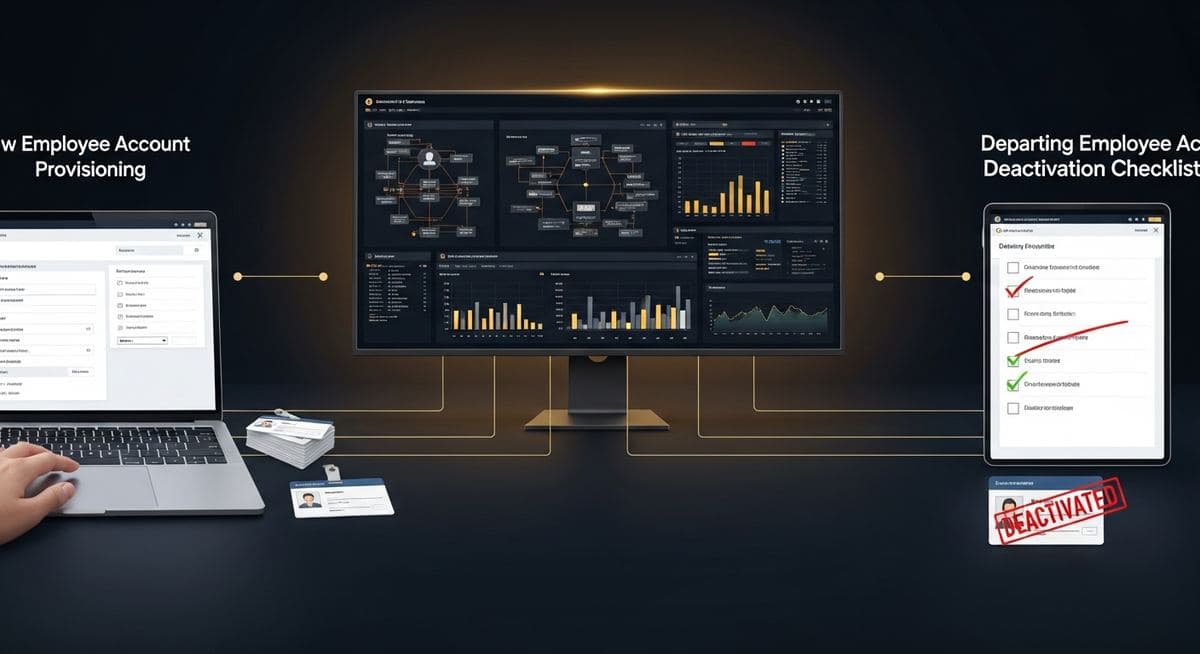
IT onboarding and offboarding are routine processes that most businesses handle inconsistently. The inconsistency is also where most insider-related security incidents originate — credentials that linger after departure, access that gets granted broadly during onboarding and never reviewed, and personal data that gets retained on personal devices because no one tracked what was there. Getting onboarding and offboarding right is one of the higher-ROI security investments any business can make.
What Goes Wrong During Onboarding
Common onboarding failures and their security implications:
- Role definition is vague — the new hire gets access to whatever similar roles have, which usually includes more than they need
- Privileged access granted by default — admin permissions assigned at hire because someone in that role might need them later
- BYOD policy not enforced — personal devices used for work without controls applied
- Training delayed — security awareness training happens "soon" but the new user has full access immediately
- Documentation incomplete — what was provisioned isn't logged systematically, so cleanup later is incomplete
The cumulative effect is that the typical employee has more access than their role requires, more devices touching business data than IT knows about, and no clear inventory of either.
What Goes Wrong During Offboarding
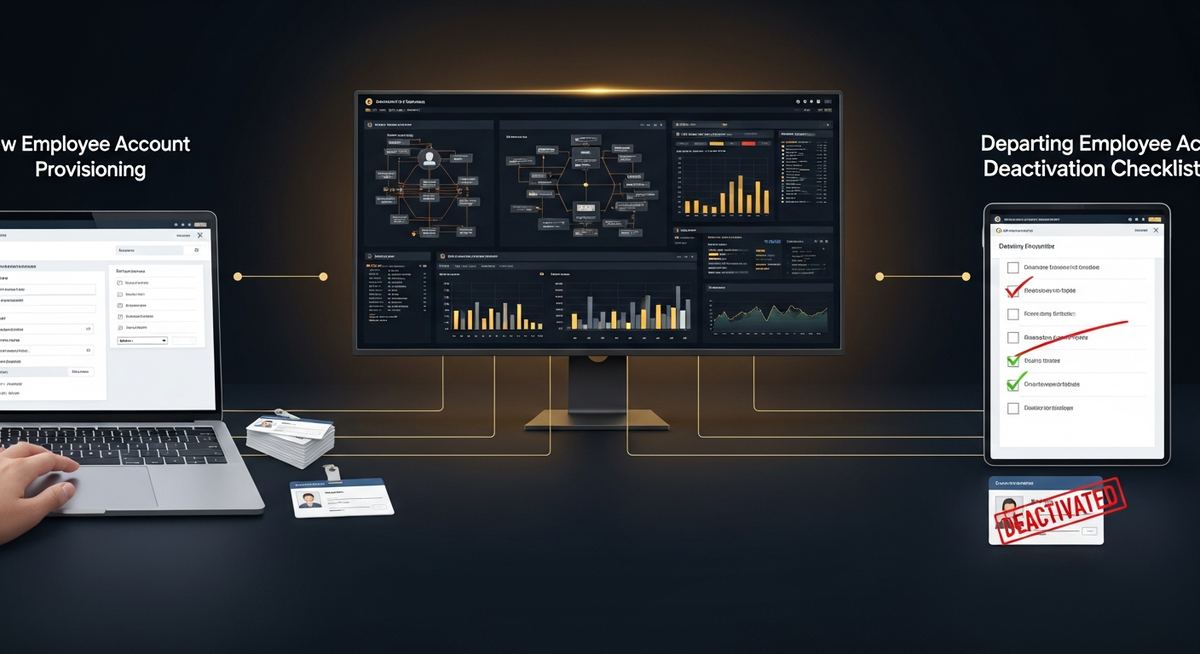
Offboarding failures are more directly consequential:
- Account disablement is delayed — terminated employee retains access for hours, days, or weeks
- Less-obvious access is missed — shared mailboxes, SaaS apps signed up directly, vendor portals, contractor relationships
- Personal devices retain business data — phones, home laptops, personal cloud accounts with business documents
- Knowledge transfer doesn't happen — what the departing employee knew about their role isn't captured
- Equipment isn't recovered — laptops, phones, tokens, badges leave the building permanently
- Forwarding rules persist — Outlook forwarding rules or autoresponders configured before departure that leak ongoing communications
The risk varies with the employee's role. A departing receptionist creates limited exposure; a departing CFO or system administrator creates substantial exposure if their access isn't comprehensively revoked.
The Structured Approach
The remedy is process discipline rather than tooling. A structured approach includes:
For onboarding: a documented checklist that's executed for every new hire (no exceptions, no shortcuts), role-based access templates that grant exactly what the role needs (not what similar roles have), an immediate security awareness training requirement before sensitive access is granted, equipment provisioning tracked in the asset management system, and a 30-day post-hire access review to confirm the assigned access matches what's actually needed.
For offboarding: a documented checklist that's executed for every departure (including same-day involuntary departures with shortened SLAs), account disablement across all systems triggered immediately at the time of departure, retrieval of business data from personal devices verified, equipment recovery and re-imaging documented, knowledge transfer captured before departure when possible, and a 30-day post-departure review to catch any access that was missed.
The Identity-Centric Architecture That Helps
Beyond process discipline, the architectural patterns that make onboarding and offboarding easier:
- Centralized identity — most application access flows through a single identity provider. Disabling the central identity revokes access to most things at once.
- Conditional Access enforcement — access depends on identity state, so a disabled identity loses access automatically
- Group-based access management — group membership drives access, so removing a user from groups during offboarding handles access revocation systematically
- Application inventory — knowing what applications a user has access to is the prerequisite for revoking that access. SaaS sprawl makes this harder; SSO-everything makes it easier.
- Mobile device management — provides ability to wipe business data from devices during offboarding without touching personal data on BYOD scenarios
Why This Matters More Than It Used To
Modern work patterns increase the exposure from poor onboarding and offboarding. More SaaS applications, more devices per employee, more remote and hybrid work, more contractor and vendor relationships. Each of these multiplies the surface that needs to be tracked and managed during transitions. The businesses that have invested in cleaning up these processes find that the security and operational benefits compound — they have clean inventories, low orphan-account risk, and faster transition times. If you'd like help structuring onboarding and offboarding for your business, a conversation with our team can scope what's required.
Leonidas is a managed IT services provider, cybersecurity consulting firm, and unified communications consultancy serving businesses across industries. We offer free 30-minute assessments. Contact us or call +1 (888) 790-8777.