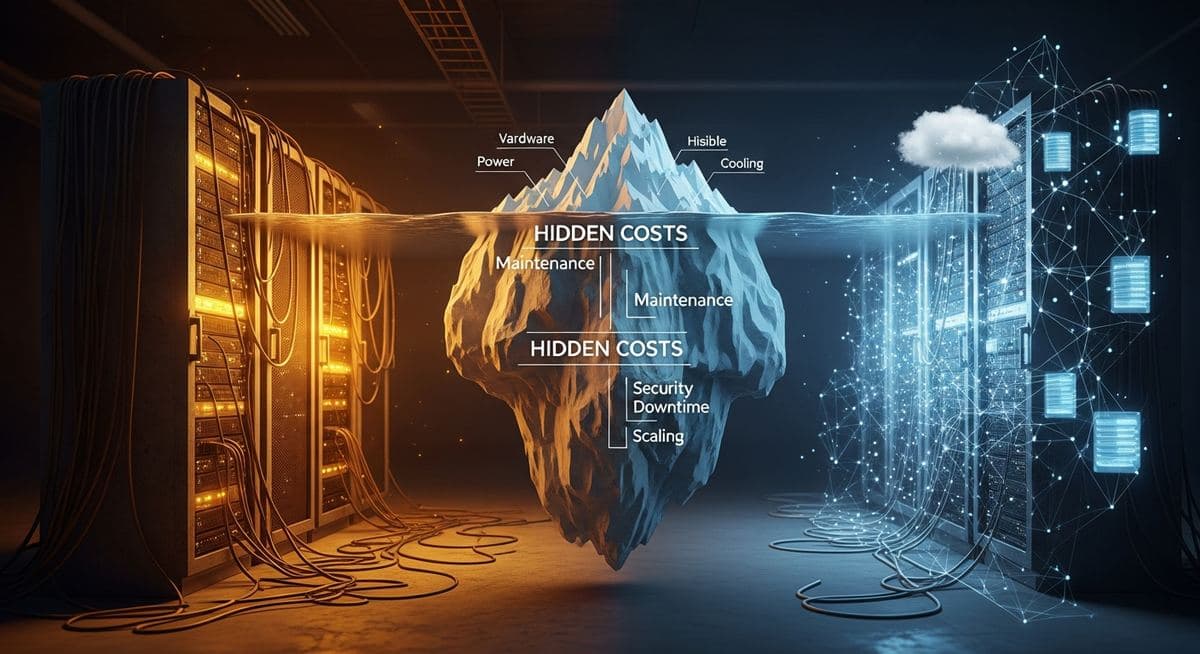
Outdated IT infrastructure rarely fails dramatically — it bleeds value slowly through small operational frictions that no one tracks individually but that compound to significant annual cost. The total impact is often invisible until someone builds the cost-stack and adds it up. Here's a framework for finding those hidden costs and a sense of what they typically total at small and mid-market businesses.
The Productivity Tax
The largest hidden cost is the productivity tax — time employees lose to systems that are slow, unreliable, or hard to use. A laptop that takes 8 minutes to boot vs. 1 minute, multiplied across 50 employees, multiplied across 250 working days, is several hundred hours of lost time per year. A network share that takes 30 seconds to open a file vs. 3 seconds compounds the same way across every file access. None of these individual incidents register as outages; collectively, they're a meaningful tax on operations.
The productivity tax is hard to quantify precisely but easy to bound. We typically estimate it at 1-2% of payroll for businesses with significantly outdated infrastructure — on a $5M payroll, that's $50,000-$100,000 in lost productive time per year. That's the cost of refreshing aging hardware, paid back annually.
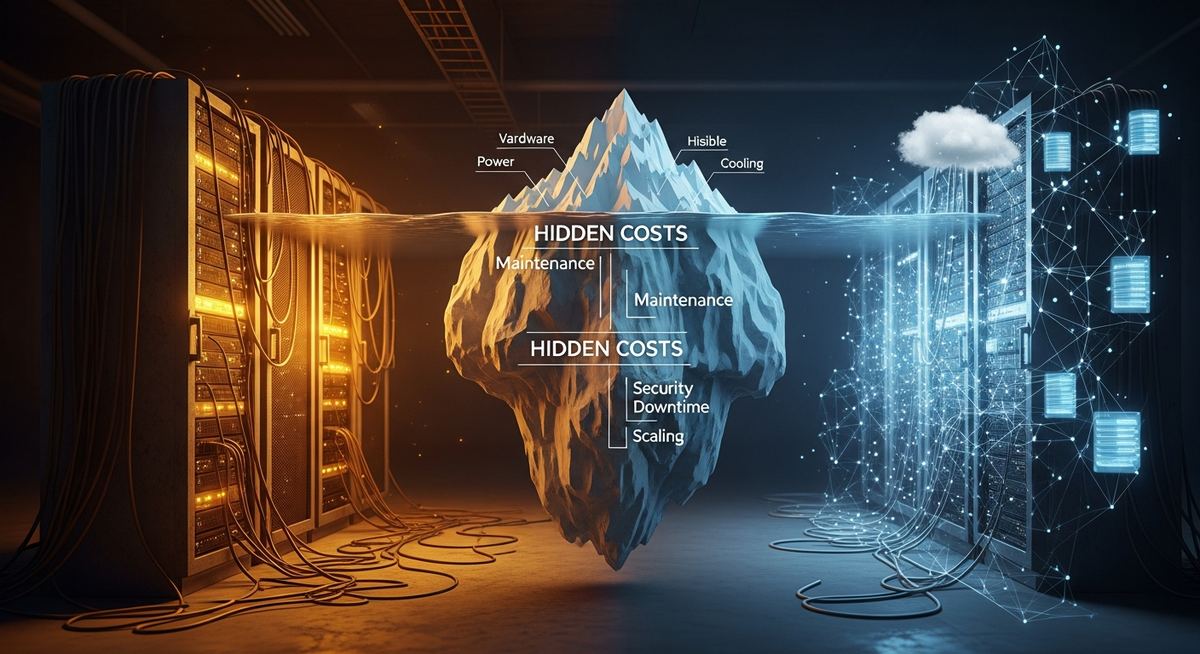
The Downtime Cost
Aging infrastructure fails more often. A 7-year-old switch is more likely to need a reboot in any given month than a 1-year-old switch; a server with failing capacitors will eventually take down whatever it hosts; a Wi-Fi network with old access points has more user complaints per month. The downtime that results — even when it's only 30 minutes here and an hour there — has a direct cost. For businesses where the team's work depends on connectivity and applications, the downtime cost per hour can run from a few hundred dollars for a small office to thousands of dollars per hour for transaction-heavy businesses.
The Security Risk Premium
Outdated infrastructure usually means outdated security posture. Older operating systems no longer receive security patches, older firewalls don't support modern protocols, older endpoint management tools don't integrate with current threat detection. Each of these creates risk exposure that has a cost — sometimes directly (cyber insurance premium increases or coverage denials), sometimes indirectly (higher probability of breach with associated remediation costs).
The risk premium is real but lumpy. Some years it costs nothing; the year a breach happens, it costs everything. The expected value over time is non-trivial — average breach cost for mid-market businesses runs into seven figures including remediation, legal, customer notification, and reputation damage.
The Opportunity Cost
The least-visible cost is the opportunity cost — what your business can't do because the infrastructure can't support it. Examples we see frequently:
- Can't roll out a new collaboration tool because the existing network won't support the bandwidth requirements
- Can't enable secure remote work because the VPN can't handle the user count
- Can't deploy a customer-facing portal because the on-prem servers can't host it reliably
- Can't move to a modern phone system because existing wiring needs to be replaced first
- Can't comply with a new customer's vendor security requirements because current controls fall short
Opportunity costs are hard to quantify but real. A deal lost because you couldn't meet a customer's security requirements; a productivity gain forgone because new tools couldn't be deployed; a market segment unreachable because the infrastructure can't support it.
The Maintenance Cost That Doesn't Get Tracked
Finally, the soft cost of keeping outdated infrastructure running: senior staff time spent on repetitive maintenance, occasional emergency repairs that get billed at premium rates, replacement parts for end-of-life equipment that costs more than the original purchase, and the institutional knowledge concentrated in one or two people who happen to remember how the legacy system was configured. When those people leave, the maintenance cost spikes.
The good news is that the cost of addressing outdated infrastructure is usually a fraction of the cumulative hidden costs. A planned refresh executed over 12-24 months — hardware, network, security tooling, identity platform — typically pays for itself in productivity recovery and downtime reduction alone, before counting the risk reduction and opportunity unlock. A free 30-minute conversation can map your environment against the categories above and identify where the priority refresh investments are.
Leonidas is a managed IT services provider, cybersecurity consulting firm, and unified communications consultancy serving businesses across industries. We offer free 30-minute assessments. Contact us or call +1 (888) 790-8777.