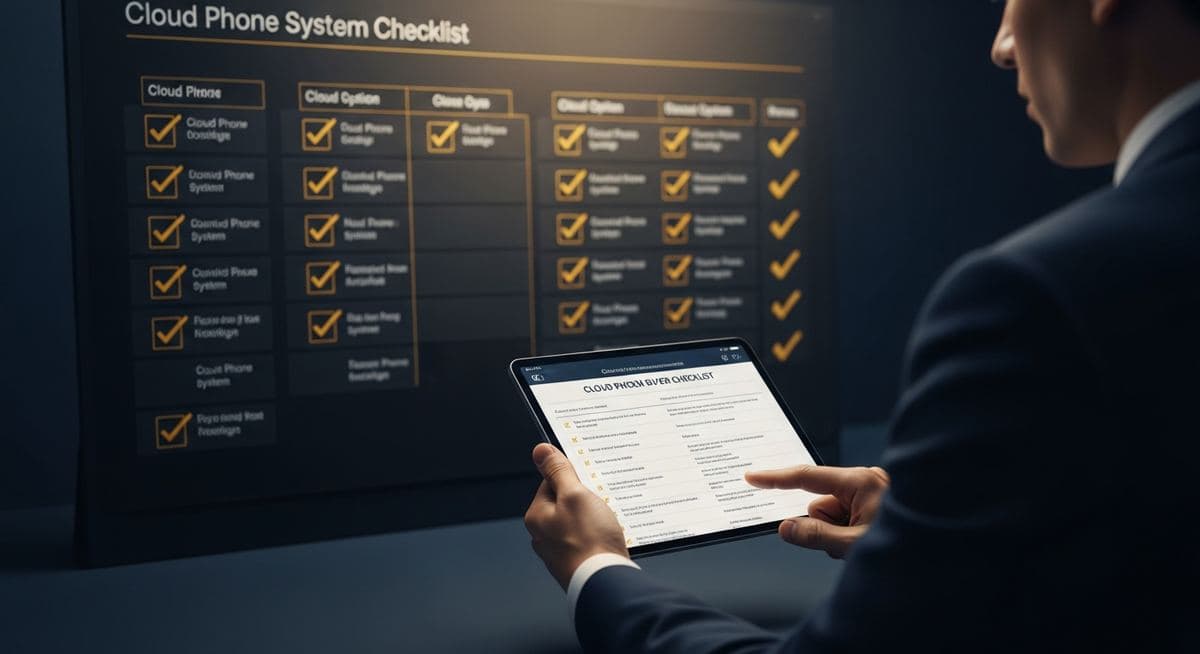
Cloud phone buying for a small business looks easy on the surface — pick a vendor, sign up, ship the phones, port the numbers. The complications usually surface after the contract is signed: feature tiers you didn't realize you needed, integrations that aren't included, network problems that show up under load, and an admin console that requires more attention than the sales pitch suggested. Here's a practical buying guide that walks through what to evaluate, what to negotiate, and what to confirm before committing.
Step 1: Define Your Actual Requirements
Before evaluating vendors, document what you need the phone system to do. The dimensions that matter:
- User count — actual seat count needed, by role type (front-line, knowledge worker, executive, contact center agent)
- Number requirements — main numbers, DID lines, toll-free, international
- Call volume — average concurrent calls, peak concurrent calls, monthly total minutes
- Integration needs — CRM, helpdesk, calendar, business app integrations
- Endpoints — desk phones, softphone-only, mobile-app dominant, conference room phones
- Special features — call recording, voicemail-to-email, auto-attendant, hunt groups, SMS, fax, contact center
- Compliance — HIPAA, PCI, call recording laws by state
- Geographic scope — domestic only, international users, international calling
Without explicit requirements, vendor pitches drive the decision instead of business needs. With them, you can evaluate vendors against your reality rather than their feature lists.
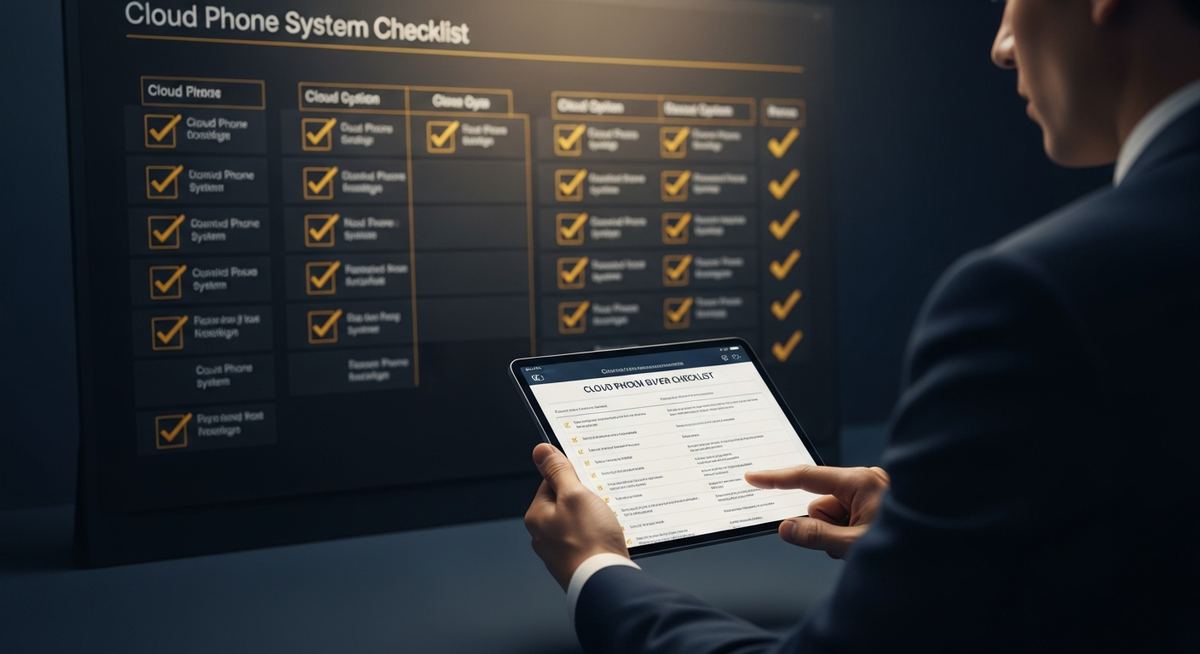
Step 2: Right-Size the Tier
Every cloud phone vendor offers tiered pricing — typically Standard, Premium, and Ultimate (or similar names). The price difference between tiers is significant; the feature difference is often less significant than the pitch suggests. Common pattern: businesses buy the top tier "to be safe" and then use 60% of what they're paying for.
Right-size by going through each tier-only feature and asking: does our team actually use this? For features that get a "yes," confirm they're truly tier-only and not available in a lower tier with an add-on. For features that get a "maybe," ask the vendor how their typical customer of your size uses them; you'll usually get a candid answer that tells you whether they're real or marketing-driven.
Step 3: Validate the Network Side
Before signing, validate that your network supports the planned deployment. The key checks: confirm bandwidth headroom for projected concurrent call volume, verify QoS is configured at the network edge (or arrange for it to be), confirm Wi-Fi readiness if softphones will be used over Wi-Fi, validate firewall configuration for SIP and RTP traffic, and consider whether failover connectivity is in place for business continuity.
Vendors will sometimes wave off network concerns during the sales process. The call-quality complaints after deployment land back on IT, not on the vendor. Get the network ready before signing, not after.
Step 4: Negotiate
Cloud phone vendors have meaningful negotiation room. Practical levers:
- Term length — 36-month commitments unlock better per-seat pricing than month-to-month
- Ramp pricing — if you're growing, build that into the deal rather than hitting tier breakpoints later
- Number porting fees — typically waivable as part of the deal
- Hardware credits — vendors will often credit hardware against multi-year deals
- Annual price-increase caps — without these, your year-three rate can be substantially higher than your year-one rate
- Training and implementation services — frequently included if asked for explicitly
Step 5: Plan the Migration
The migration itself is non-trivial. Key elements: number porting timeline (typically 2-4 weeks for FCC-eligible numbers, longer for international), parallel operation period during migration, training for end users on the new system, admin training for whoever will manage day-to-day, and a rollback plan if something goes wrong during cutover. A well-planned migration takes 6-10 weeks for a small business; a rushed migration takes longer because it creates problems that need to be fixed after the fact.
If you'd like help running the buying process for a specific deployment, a conversation with our UC team can scope it against your environment.
Leonidas is a managed IT services provider, cybersecurity consulting firm, and unified communications consultancy serving businesses across industries. We offer free 30-minute assessments. Contact us or call +1 (888) 790-8777.