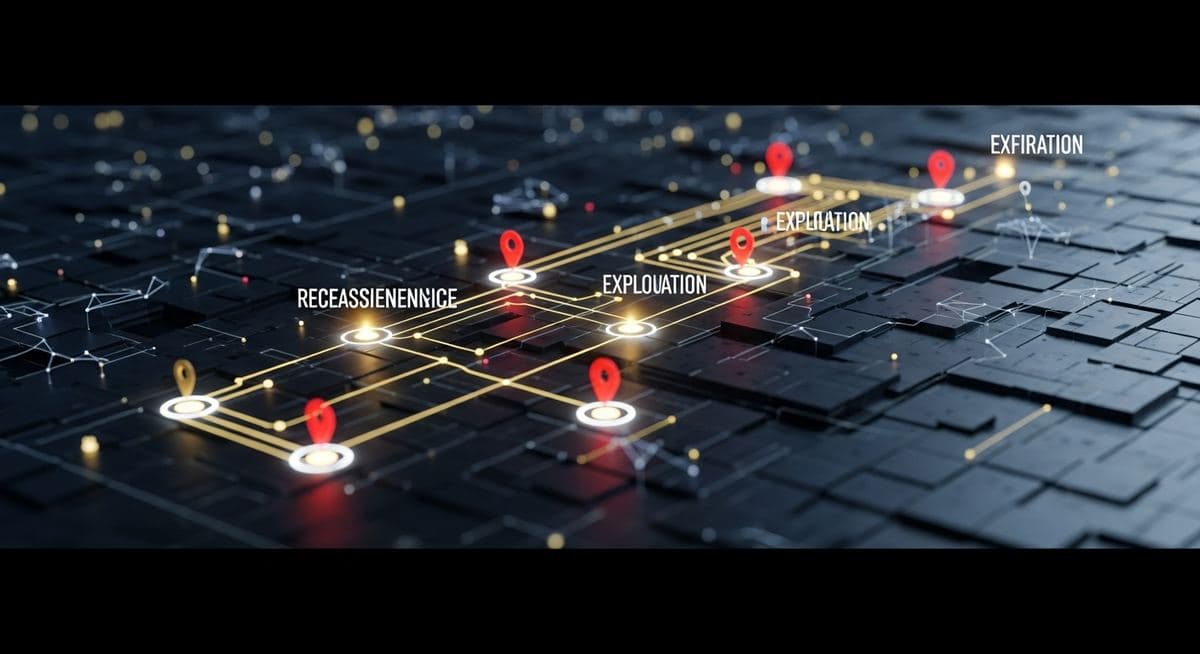
The anatomy of a cyberattack follows a recognizable pattern across nearly every incident — variations in technique, but the same fundamental stages. Understanding that pattern matters because it shows where defensive investments are most valuable. Some stages of an attack are nearly impossible to prevent once initiated; others are practically impossible for attackers to succeed at if specific controls are in place. Here's how a typical breach actually unfolds.
Stage 1: Reconnaissance
Before the visible attack, attackers gather information about the target. Sources include public business websites, social media profiles of employees, professional networking sites, breach databases for leaked credentials, and increasingly, AI-driven aggregation of publicly available data. For a determined attacker, building a useful profile of a target business and its key employees takes hours, not days.
Defensive response at this stage is limited — public information is public. What helps: reducing the public attack surface (limiting which employees are publicly identifiable as having admin or financial roles), using corporate email addresses rather than personal ones for business operations, and being aware that information shared publicly will be used in attacks.
Stage 2: Initial Access
The actual attack starts with gaining initial access to a target system. The dominant techniques in 2026:
- Phishing — by a wide margin the most common initial access vector
- Credential reuse — leaked credentials from other breaches tried against business systems
- Exploitation of unpatched vulnerabilities — particularly internet-exposed services like VPN, RDP, and remote management interfaces
- Compromised third-party access — supplier or vendor compromise pivoting into the business
- Social engineering of help desk — calling support to reset credentials or get MFA disabled
This stage is where most defensive investment pays back. Strong MFA, patching discipline, vendor management, and process controls on help desk dramatically reduce successful initial access.
Stage 3: Persistence and Privilege Escalation
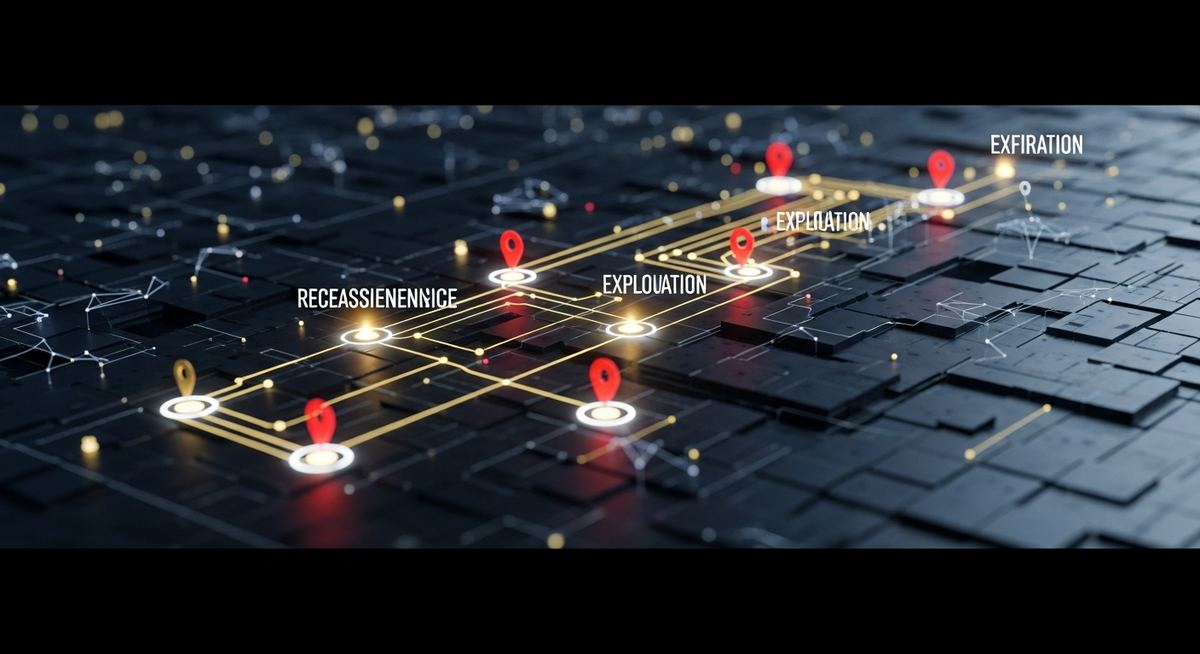
Once inside, attackers establish persistence (so reboots or password changes don't kick them out) and escalate privileges (so they can access more than the original compromised account). Common persistence techniques: scheduled tasks, registry modifications, malicious browser extensions, OAuth tokens for cloud services. Common privilege escalation: exploiting unpatched local vulnerabilities, harvesting credentials cached on the compromised system, using legitimate admin tools to authenticate to systems the attacker shouldn't access.
EDR and MDR platforms catch many of these behaviors. Endpoint hardening (least-privilege user accounts, application allow-listing, current patches) reduces the surface area attackers can leverage.
Stage 4: Lateral Movement and Discovery
With persistence and escalated privileges, attackers explore the network looking for valuable systems and data. They map the environment, identify file servers and databases, find backup systems (often a priority target since destroying backups multiplies leverage), and identify routes to high-value targets.
Network segmentation limits how much an attacker can reach from any single compromised system. Identity-based access controls limit what's accessible even if credentials are compromised. Monitoring for unusual access patterns catches lateral movement in progress.
Stage 5: Data Exfiltration and Impact
The final stage is where the attack accomplishes its objectives — ransomware deployment, data theft and extortion, fraudulent transfers, or whatever specific outcome the attacker is pursuing. Modern attacks often combine data theft with ransomware ("double extortion"), giving the attacker leverage even if the victim has good backups.
By this stage, defensive options are limited. The attack succeeds if it reaches this point. The defensive investments that pay back here are speed of detection and response — catching the attack during stages 2-4 before it reaches impact. That's why EDR/MDR with active SOC monitoring is so consequential; the difference between detecting an attack at stage 3 vs. stage 5 is often the difference between a contained incident and a major breach.
Where Defensive Spend Matters Most
Looking across the attack lifecycle, the highest-leverage defensive investments are at stages 2 and 3 — preventing initial access and stopping persistence/escalation. Specifically: phishing-resistant MFA, current patching discipline, EDR/MDR with behavioral detection, identity-based access controls, vendor risk management, and immutable backups. Most of the rest of the security stack supports these or addresses specific compliance requirements. If you're scoping your defensive priorities, a free assessment can map them against the attack lifecycle for your environment.
Leonidas is a managed IT services provider, cybersecurity consulting firm, and unified communications consultancy serving businesses across industries. We offer free 30-minute assessments for businesses evaluating their IT and security posture. Contact us or call +1 (888) 790-8777.