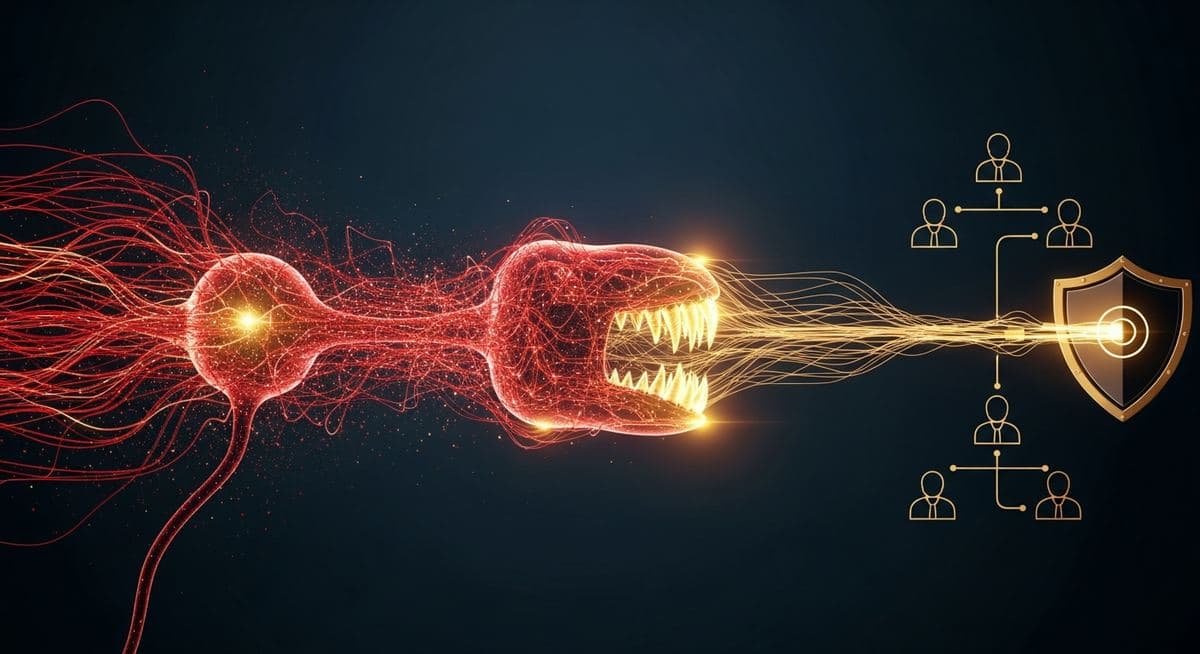
AI-powered cyberattacks are no longer a research curiosity — they're a working component of the threat landscape. What used to require nation-state resources is now available to commodity attackers through accessible AI tools. The implications for SMB and mid-market defenses are real but specific: certain attack categories have gotten meaningfully more dangerous, while others haven't changed much. Here's the honest read on where AI changes the threat model and what businesses should do about it.
What AI Has Genuinely Changed
The attack categories where AI capabilities produce measurable improvements:
- Phishing quality — generative AI produces grammatically perfect, contextually relevant phishing content at scale. The traditional linguistic markers of phishing are gone.
- Spear phishing personalization — AI can rapidly research a target's public footprint and produce highly tailored messages, automating what used to require manual research effort
- Voice cloning for vishing — convincing voice replication of a CEO, vendor, or family member is now possible from short audio samples, enabling phone-based social engineering
- Deepfake video for higher-stakes social engineering — still rare in real attacks but increasingly possible, particularly for video-based wire fraud schemes
- Code generation for exploit development — attackers can generate working exploit code faster than before, compressing the time between vulnerability disclosure and active exploitation
- Defensive evasion — AI-driven adjustments to malware that change signatures faster than defenders can update detection rules
What AI Hasn't Changed Much
Some attack categories haven't seen meaningful AI-driven improvements yet:
- Lateral movement post-compromise — once inside, attackers still rely on the same techniques as before. AI hasn't produced a step-change here.
- Initial credential compromise — phishing is more convincing but the basic mechanism (trick a user into entering credentials) hasn't changed
- Ransomware deployment — the attack chain after access is established still uses traditional techniques
- Vulnerability discovery at scale — AI helps but isn't yet producing dramatic improvements in finding novel vulnerabilities in defended targets
Defensive Implications
The defensive response to AI-augmented attacks emphasizes a few specific shifts:
Process verification over content evaluation — security awareness training that focuses on "verify before acting on financial requests" rather than "spot the phishing email" is more durable against AI-quality phishing
Phishing-resistant MFA on high-value accounts — security keys and platform authenticators bind the credential to the legitimate domain. Even a perfect phishing site can't capture a usable credential.
Out-of-band verification for sensitive actions — wire transfers, vendor changes, payroll modifications should require verification on a different channel than the one initiating the request
Behavioral detection over signature detection — EDR and MDR platforms that watch for anomalous behavior (rather than matching known malware signatures) are more resilient to AI-adjusted malware
Identity-anchored security — conditional access policies that consider location, device, and behavioral signals can catch successful credential compromise that authentication alone wouldn't stop
What This Looks Like in Practice
A typical AI-augmented attack scenario today: AI-generated spear phishing email arrives at a target, message looks legitimate and references actual current business context, target clicks link to a phishing site (perfect replica of real login page), credentials are captured but MFA blocks immediate use, attacker pivots to MFA fatigue attack or session token theft, and eventually achieves credential takeover if defenses aren't tight. Strong MFA, conditional access, and behavioral monitoring at this stage are what stop the attack before it reaches valuable systems.
The Honest Bottom Line
AI hasn't fundamentally changed cybersecurity strategy for SMBs — the same defensive priorities apply. What's changed is that the consequences of getting the basics wrong have escalated. A business with weak MFA could survive against pre-AI phishing through user vigilance; today's AI-quality phishing will eventually compromise users who would have caught earlier attempts. The basics aren't optional anymore. If you're scoping your defensive posture against the current threat landscape, a free assessment can help identify priority gaps.
Leonidas is a managed IT services provider, cybersecurity consulting firm, and unified communications consultancy serving businesses across industries. We offer free 30-minute assessments for businesses evaluating their IT and security posture. Contact us or call +1 (888) 790-8777.