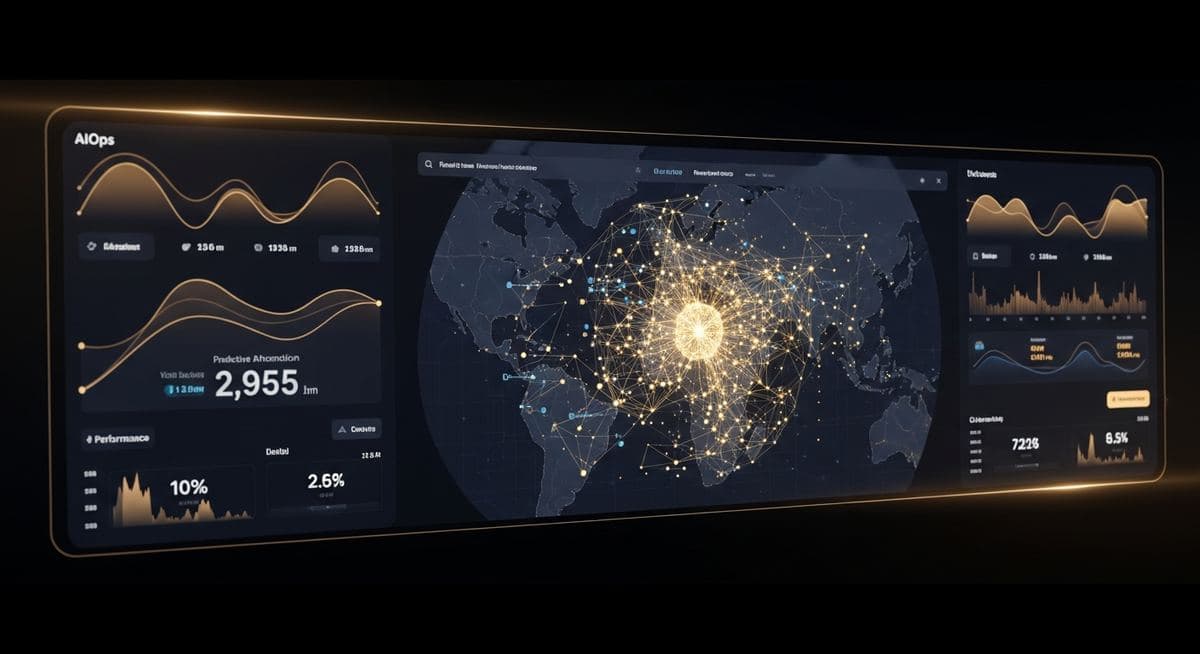
AI-native networks and AIOps represent the most significant shift in network operations since the move to cloud. The pitch is straightforward: instead of network engineers manually correlating alerts, triaging tickets, and tuning configurations, AI systems ingest telemetry from across the network and surface what matters before humans notice. The reality is more nuanced — AIOps lives up to the marketing on some dimensions and falls short on others. Here's an honest read on where the technology is, what it's good at, and what businesses should expect over the next 24 months.
What AIOps Actually Does
AIOps (Artificial Intelligence for IT Operations) is a category of tooling that applies machine learning to operational data — logs, metrics, events, traces — to detect anomalies, correlate related signals across systems, and reduce alert noise. The core value proposition is alert correlation: instead of 50 alerts hitting the on-call engineer when a database server fails, AIOps platforms can consolidate those into "database server X is down, affecting the following 12 dependent services." That sounds simple; building it to work reliably across a heterogeneous environment is hard.
The newer wave — sometimes labeled "AI-native networking" by vendors — extends this into network operations specifically. Platforms claim to detect Wi-Fi degradation before users notice, identify misconfigurations that haven't yet caused outages, and recommend remediations based on patterns from similar environments. Some of this is real and useful. Some is well-marketed pattern matching that you could approximate with rule-based monitoring.
Where AIOps Is Genuinely Useful Today
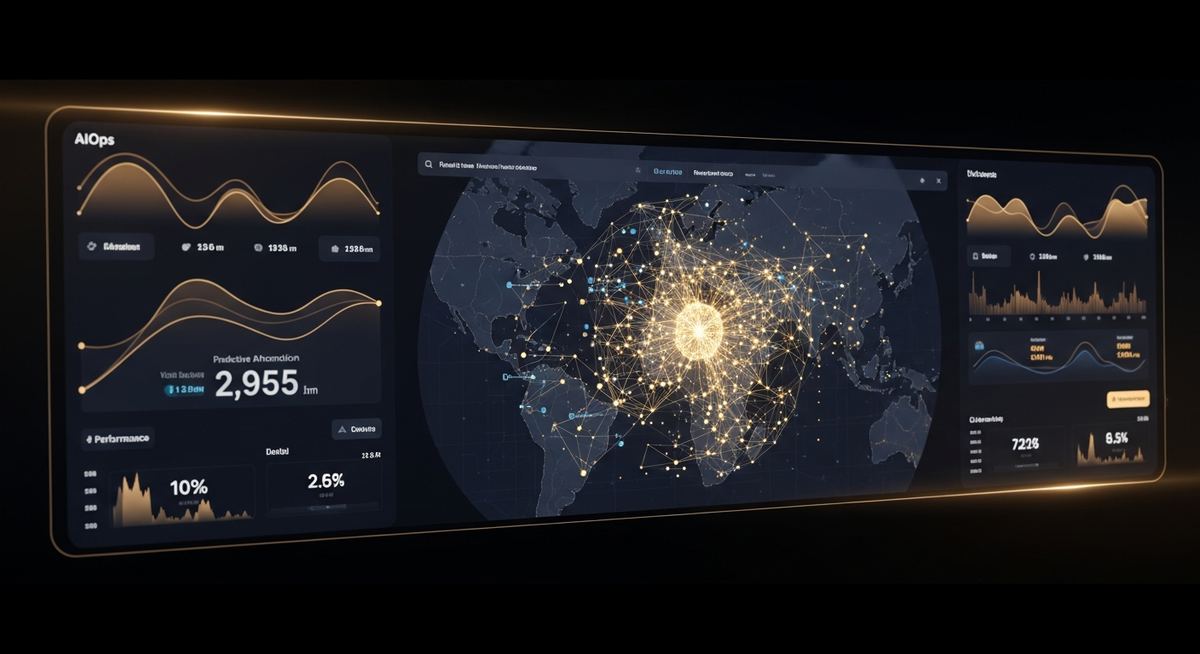
A few use cases where AI-driven network and operations tooling delivers measurable value right now:
- Wi-Fi user experience monitoring — modern Wi-Fi management platforms detect client-side performance degradation that doesn't show as an outage but kills the user experience
- Anomaly detection on network telemetry — spotting traffic patterns that deviate from baselines is something ML does well; this is foundational to modern threat detection
- Alert correlation — reducing alert volume during cascading incidents so on-call doesn't drown in noise
- Predictive hardware failure — switches, access points, and storage devices that exhibit pre-failure patterns can be flagged before they cause outages
- Configuration drift detection — identifying when network device configurations have diverged from the documented baseline
Where the Hype Outruns Reality
A few areas where vendor marketing exceeds what AIOps actually delivers in production. Autonomous remediation — AI systems automatically fixing problems without human review — is still rare in business-critical environments, because the risk of an AI making the wrong change in a production system is high enough that most teams require human approval before automated actions execute. Root cause analysis, despite being heavily marketed, is still hard for AIOps platforms to do reliably across complex environments — they identify correlated symptoms, but identifying actual root cause requires domain context the AI doesn't have. Cross-vendor integration is also weaker than the demos suggest; AIOps platforms work best within a single ecosystem and lose effectiveness when telemetry spans many vendors with inconsistent data models.
What to Look For Over 24 Months
The trajectory is toward AI being embedded inside the platforms businesses already use, rather than as a separate AIOps product layer. Microsoft, Cisco, Meraki, Fortinet, and others are integrating AI capabilities natively. For most SMB and mid-market businesses, the practical implication is that you'll experience AIOps capabilities as features inside the management consoles you already log into, not as a separate product. That's a healthier path than the standalone-platform approach — it avoids one more dashboard and one more integration.
If you're considering investing in AIOps tooling, the honest framing is: it's a useful augmentation of a well-run operations practice, not a substitute for one. A team that's drowning in alerts because their environment lacks discipline won't be saved by AIOps; the AI will just generate more sophisticated alerts. If you'd like a calibrated view of where the technology fits in your environment, a free 30-minute assessment is a quick way to scope the question.
Leonidas is a managed IT services provider, cybersecurity consulting firm, and unified communications consultancy serving businesses across industries. We offer free 30-minute assessments. Contact us or call +1 (888) 790-8777.