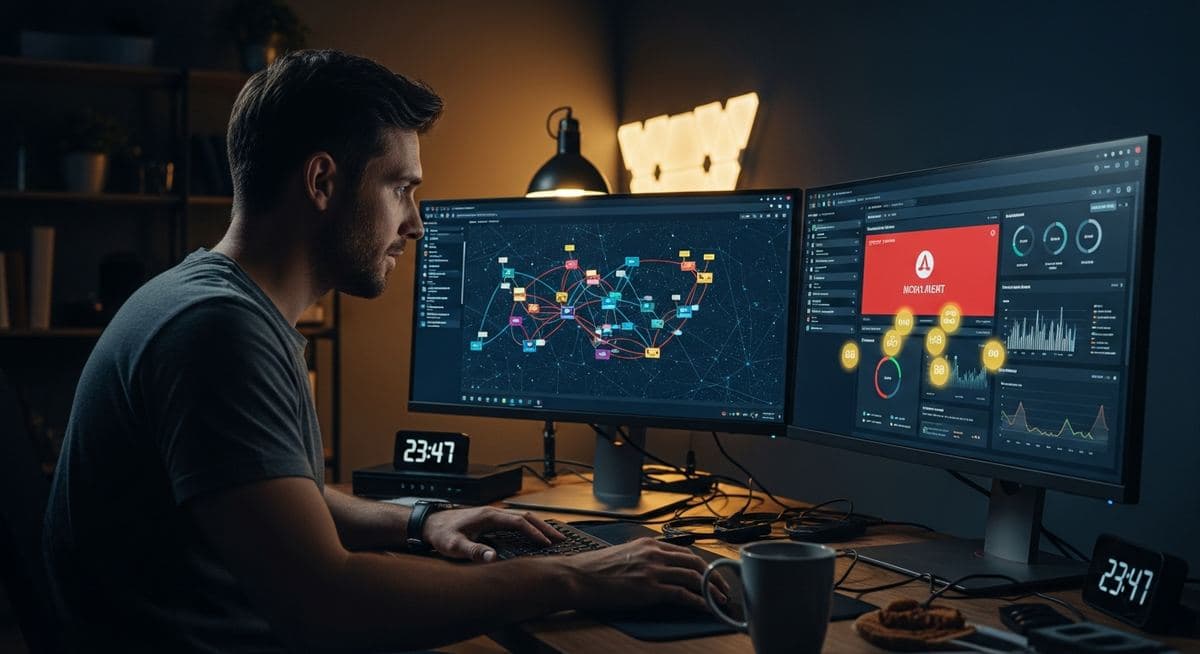
What Happens When Your IT Goes Down on a Friday Night? — Every business owner has been there: it’s 6:30 PM on a Friday, your team has logged off, and someone calls to say the server is down, the VPN isn’t connecting, or email is bouncing. After-hours IT support is where the difference between a real managed service provider and a glorified break-fix shop becomes impossible to ignore.
The Problem With 8-to-5 IT Support
Ransomware doesn’t wait for business hours. Neither do hardware failures, ISP outages, or the employee who accidentally deleted a shared drive before heading out for the weekend. A significant portion of IT emergencies happen outside of 9-to-5 — and the businesses most vulnerable to extended downtime are the ones whose IT support model was designed around business hours. Some MSPs operate on a “call us and we’ll get back to you” model for after-hours events. That made sense when critical systems were offline on weekends. It doesn’t make sense when your cloud applications, VoIP phones, and customer-facing systems run 24/7.
How Leonidas Handles After-Hours Emergencies
Our after-hours IT support operates on a tiered response model based on severity. A P1 incident — anything that takes down business operations, compromises security, or affects multiple users — gets a response within 15 minutes, any time of day or night. Not a ticket acknowledgment. An actual response from an engineer who already knows your environment.
This is possible because of how we build client relationships before emergencies happen. We document your infrastructure, critical systems, escalation contacts, and recovery priorities during onboarding — not at 9 PM on a Saturday when you’re frantic. When the call comes in, the responding engineer already knows whether your backup runs nightly or weekly, who your ISP is, and what your DR plan says to do first.

What Happens in the First 15 Minutes
- Triage: Identify scope immediately — one user, one location, or the whole organization?
- Contain: If there’s any indication of a security incident, isolation happens before diagnosis. A ransomware event contained to one machine is manageable; one that spreads overnight is not.
- Communicate: You get a status update within 15 minutes, even if it’s “we’re investigating and here’s what we know so far.” Silent support desks destroy trust.
- Engage vendors in parallel: If the issue involves a carrier or third-party platform, we initiate the escalation ticket simultaneously — not after spending an hour ruling out our own stack.
- Document: Every after-hours incident gets a root-cause analysis and remediation recommendations added to your account the next business day.
Why Response Time Is a Revenue Issue
For a business doing $5 million annually, one hour of downtime costs roughly $2,400 in lost productivity alone — and that doesn’t count customer-facing impact. Calculate your own downtime cost and the math on after-hours support becomes straightforward. The difference between a 15-minute and a 3-hour response isn’t just an IT metric — it’s the difference between a fixable Friday event and a weekend-long outage that damages customer relationships you spent years building.
Building Your After-Hours Playbook
Every business should have a documented after-hours IT response plan: who to call and in what order, what constitutes a P1 vs. a “wait until Monday,” where your backup credentials are stored offline, and what your managed IT provider’s actual after-hours SLA looks like in writing. If you can’t find that document in under two minutes, that’s your answer.
Leonidas is a managed IT services provider, cybersecurity consulting firm, and unified communications consultancy serving businesses across industries. We offer free 30-minute assessments. Contact us or call +1 (888) 790-8777.