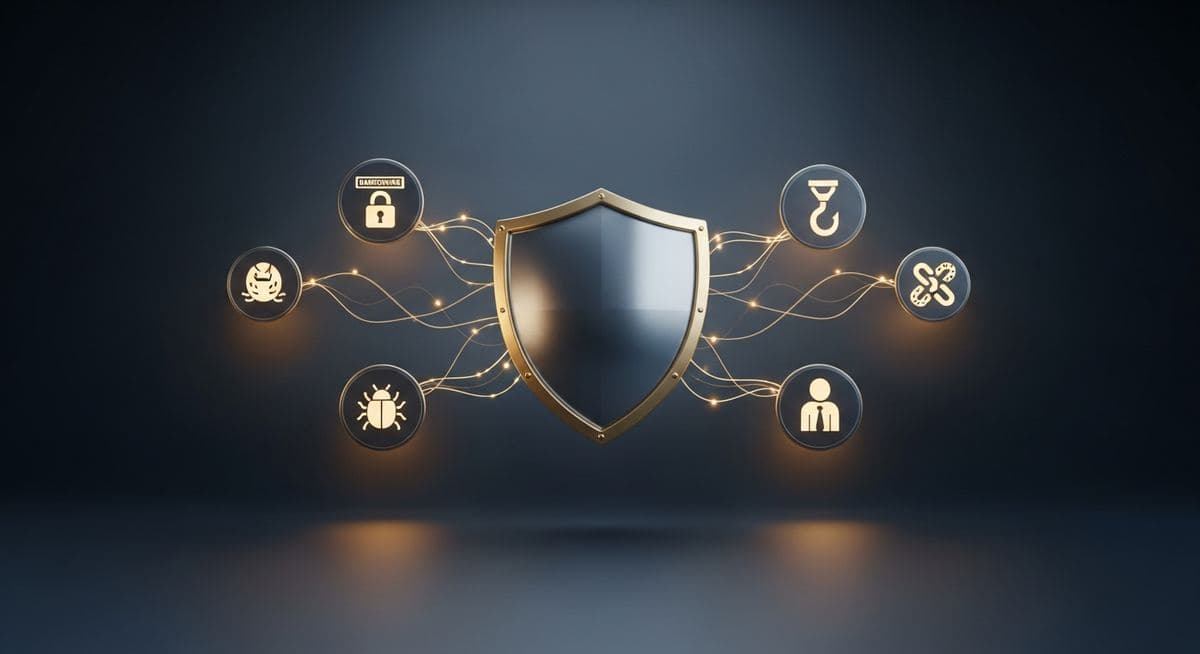
The 5 cybersecurity threats every business must face in 2026 aren't theoretical — they're patterns we're seeing in real incidents at SMB and mid-market organizations. The landscape has shifted noticeably from even 18 months ago, with AI-augmented attack capabilities, more aggressive ransomware variants, and supply chain compromises hitting smaller businesses than they used to. Here's the practical priority list and what each one actually means for typical businesses.
1. AI-Augmented Phishing
Generative AI has dramatically improved the quality of phishing attempts. The classic markers — broken English, awkward phrasing, generic content — are largely gone. Modern AI-generated phishing produces messages that are grammatically perfect, contextually relevant, and increasingly personalized using public information about the target. Voice cloning is becoming convincing enough that "verify with a phone call" is no longer reliable for high-stakes financial requests.
The defensive response: phishing-resistant MFA (security keys, not SMS) on high-value accounts, out-of-band verification for any wire transfer or significant financial action, and security awareness training that emphasizes process verification rather than spotting linguistic red flags.
2. Ransomware Targeting Mid-Market
Ransomware groups have shifted from headline-grabbing enterprise targets to systematic exploitation of mid-market businesses. The reasoning: mid-market targets pay reliably (often through cyber insurance), have weaker defenses than enterprise targets, and produce less media attention that triggers government response. The result is a steady stream of ransomware incidents at businesses that thought they were too small to be targeted.
The defensive response: immutable backups that ransomware can't reach, EDR or MDR on every endpoint, network segmentation to limit blast radius, and a tested incident response plan with cyber insurance pre-engaged.
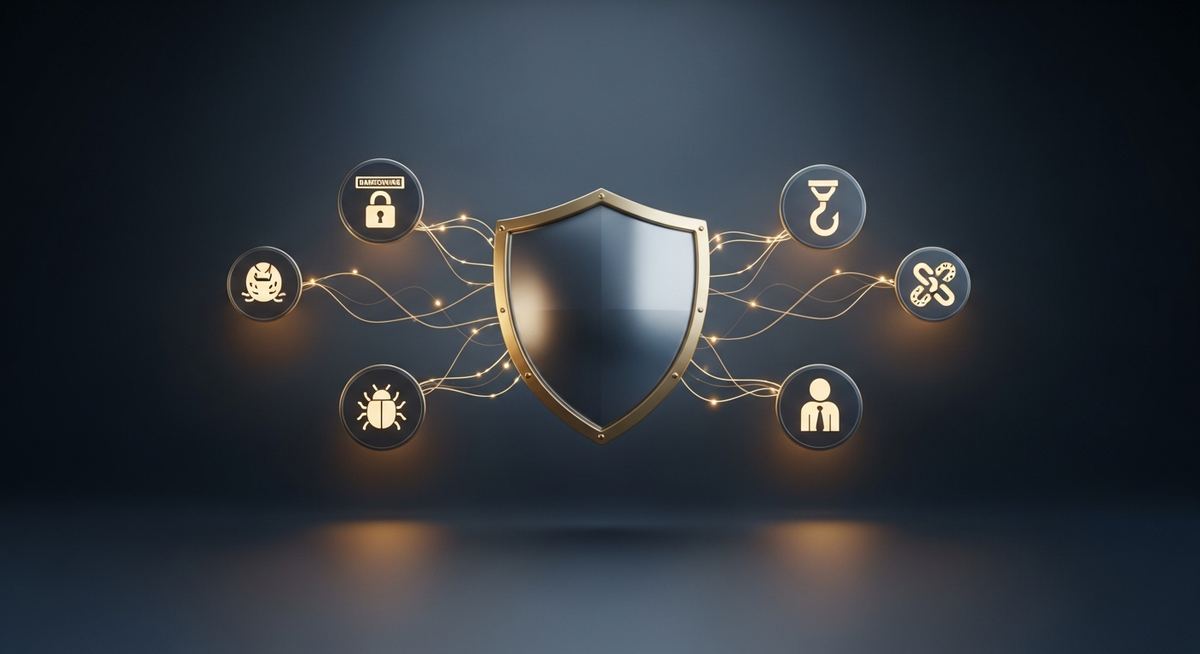
3. Supply Chain Compromise
Attackers are increasingly hitting businesses through their software vendors and IT service providers rather than direct attacks on the business itself. The pattern: compromise a widely-used SaaS tool, IT management platform, or MSP, then leverage that access into the customer base. SolarWinds, Kaseya, and similar incidents have established the playbook; smaller-scale supply chain attacks now happen regularly.
The defensive response: vendor risk management for any third party with access to business systems, multi-factor authentication on every connected service, monitoring of cross-tenant or cross-domain access patterns, and incident response plans that explicitly cover supplier compromise scenarios.
4. Credential Stuffing and Account Takeover
Data breaches at consumer services produce billions of leaked username/password pairs that attackers test against business systems. Employees who reuse passwords between personal and work accounts give attackers a working credential for the business. Once inside, attackers establish persistence, exfiltrate data, and often pivot to additional systems.
The defensive response: MFA on every account (especially email, VPN, and SaaS apps), password managers to eliminate reuse, monitoring for impossible-travel or anomalous sign-in patterns, and conditional access policies that block high-risk sign-ins automatically.
5. Insider Threats and Misconfiguration
Not every threat comes from outside. Disgruntled employees with broad access, departed staff with credentials that weren't revoked, and well-intentioned employees who misconfigure cloud resources continue to cause meaningful incidents. The cloud era has expanded the misconfiguration surface area — a single misclicked sharing setting on a SharePoint site or AWS S3 bucket can expose sensitive data without anyone noticing for months.
The defensive response: clean onboarding and offboarding processes with documented access reviews, privileged access management to limit standing admin permissions, configuration monitoring on cloud resources, and DLP controls on sensitive data flows.
How to Prioritize
For SMB and mid-market businesses, the right priority sequence: confirm MFA is enforced everywhere with phishing-resistant factors for sensitive accounts, validate that backups are immutable and tested, deploy modern endpoint protection across the fleet, formalize vendor risk management for critical suppliers, and tighten onboarding/offboarding processes. Most of the threat landscape is addressed by execution on those fundamentals; advanced controls add value but only after the basics are solid. A conversation with our security team can scope where your specific gaps are.
Leonidas is a managed IT services provider, cybersecurity consulting firm, and unified communications consultancy serving businesses across industries. We offer free 30-minute assessments for businesses evaluating their IT and security posture. Contact us or call +1 (888) 790-8777.