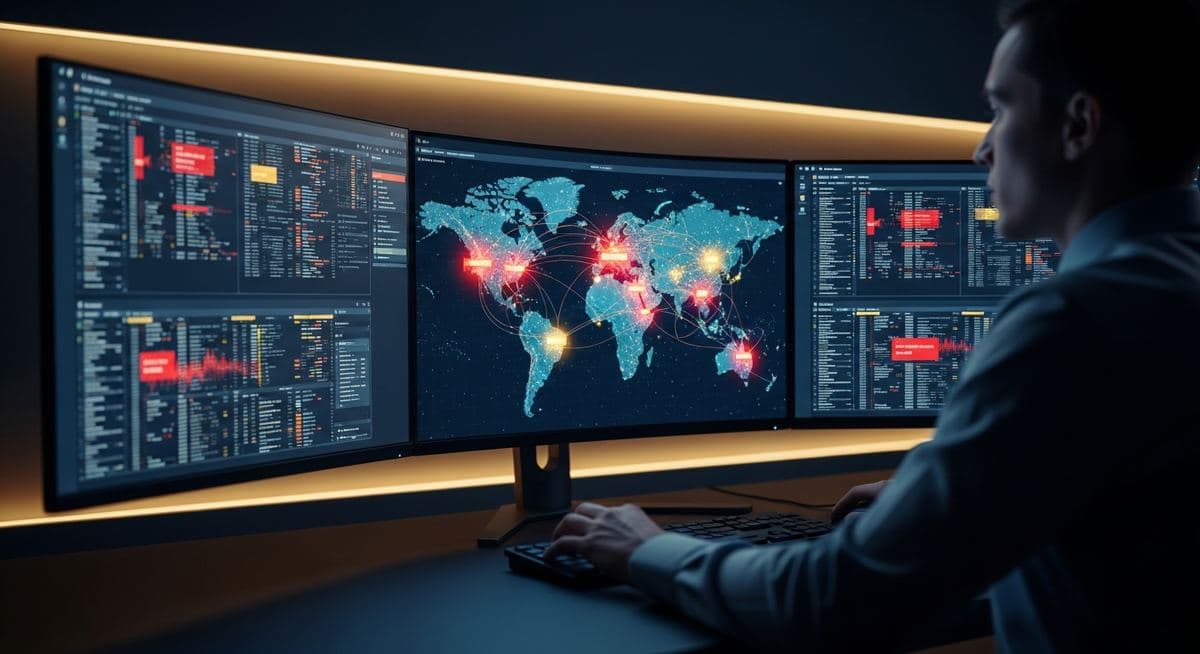
SIEM for Business — Security Information and Event Management (SIEM) is one of those enterprise security terms that comes up frequently in cybersecurity conversations but rarely gets a clear, plain-English explanation. When a vendor or compliance auditor mentions SIEM requirements, or when your MSP proposes adding SIEM to your security stack, it helps to understand what you're actually evaluating. Here's what SIEM is, what it does, and an honest assessment of when it makes sense for businesses outside the Fortune 500.
What SIEM Is and How It Works
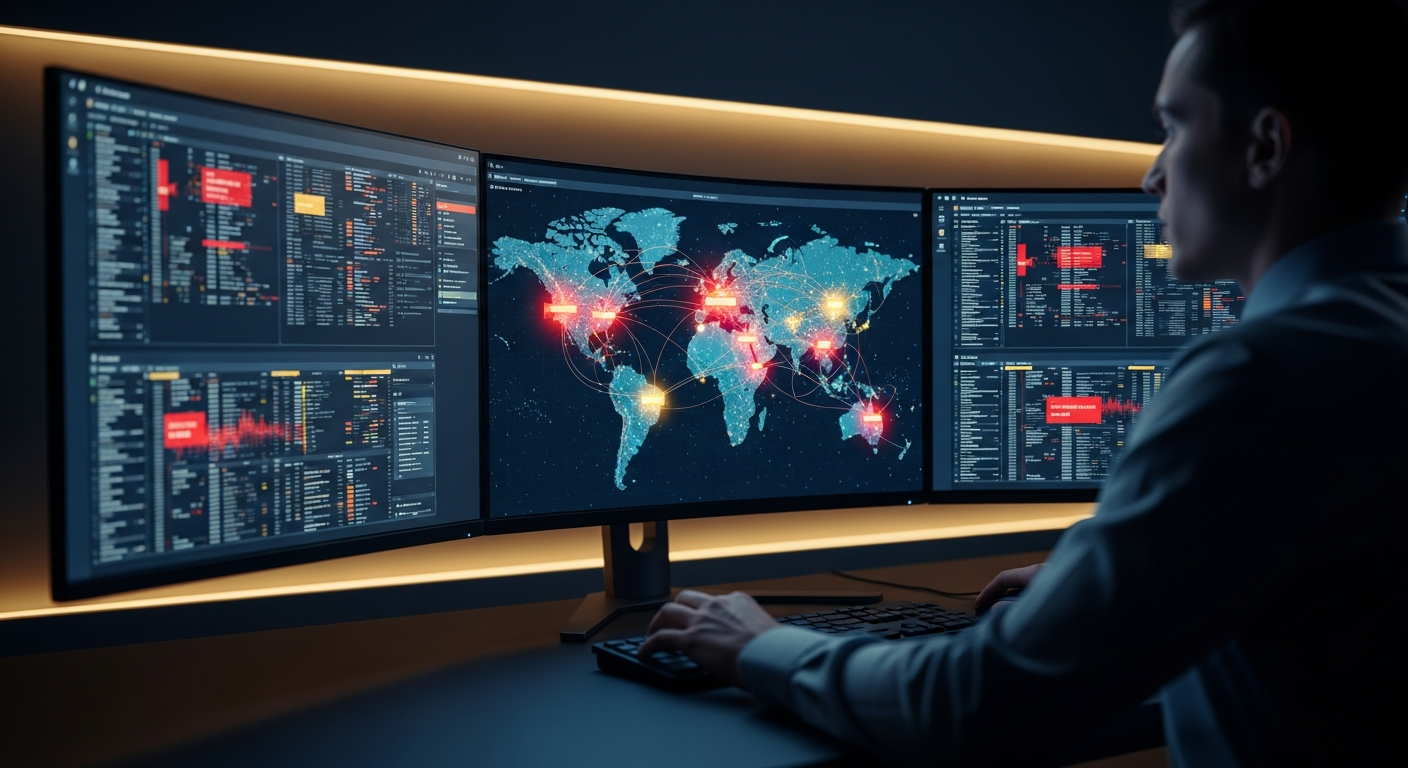
A SIEM platform collects log data from across your IT environment — firewalls, servers, endpoints, cloud applications, Active Directory, VPNs — aggregates it in a central repository, and applies rules and analytics to detect patterns that indicate security incidents or policy violations. The "Security Information" part refers to the aggregation and correlation of data from multiple sources. The "Event Management" part refers to the alerting, investigation, and response workflows that operate on that data.
Without SIEM, security logs exist in isolation: your firewall logs show blocked connections, your Active Directory logs show authentication events, your endpoint protection logs show malware detections. But they don't talk to each other. An attacker who compromises a credential, bypasses the firewall, and moves laterally across the network generates events in multiple systems — none of which, viewed in isolation, tells the full story. SIEM correlates these events and surfaces the pattern.
What SIEM Costs and What It Requires
Enterprise SIEM platforms (Splunk, Microsoft Sentinel, IBM QRadar, Exabeam) are substantial investments: licensing typically scales with data ingestion volume and can run tens of thousands to hundreds of thousands of dollars annually for larger deployments. Beyond licensing, effective SIEM requires:
- Initial configuration to onboard log sources and tune detection rules
- Ongoing tuning to reduce false positives and adapt to environment changes
- Analyst time to investigate alerts — a SIEM that generates alerts no one reviews is worse than no SIEM, because it creates false confidence
- Regular content updates to detection logic as threat tactics evolve
This is why SIEM deployments that lack dedicated security analyst resources frequently fail to deliver value. The technology is only as useful as the human process that acts on its output.
Do Small and Mid-Sized Businesses Actually Need SIEM?
The honest answer: most small businesses don't need a standalone SIEM deployment. The investment in licensing, implementation, and ongoing analyst time typically isn't justified by the threat model or available budget. However, the underlying need that SIEM addresses — centralized log collection, threat detection, and incident investigation capability — is a legitimate requirement for businesses of any size that face real threat exposure.
The practical alternative for most SMBs is a managed SIEM or SOC (Security Operations Center) service delivered by an MSSP. This provides the log aggregation, detection, and analyst coverage without requiring you to own, configure, and staff the platform. The cost structure moves from capital-intensive to subscription-based, and the coverage comes with trained analysts whose full-time job is reviewing alerts.
When SIEM Becomes Non-Optional
There are scenarios where some form of centralized log management and SIEM capability moves from "good practice" to required:
- CMMC Level 2+ — the Cybersecurity Maturity Model Certification for defense contractors requires audit log management and review practices that effectively mandate SIEM-like capabilities
- HIPAA — covered entities and business associates need to maintain audit logs of access to PHI and review them for unauthorized access
- SOC 2 — the Security trust service criterion includes monitoring and logging requirements
- Cyber insurance — insurers increasingly ask about log management and monitoring capabilities during underwriting
At Leonidas, we offer managed SIEM and SOC services as part of our MSSP practice. If you're evaluating whether your current logging and monitoring capabilities are adequate for your compliance requirements or threat profile, a free security assessment will give you a clear picture.
Leonidas is a managed IT services provider, cybersecurity consulting firm, and unified communications consultancy serving businesses across industries. We offer free 30-minute assessments. Contact us or call +1 (888) 790-8777.